A clogged drain can make a long day even more annoying. After hours at work, you just want to eat a nice meal and have hot shower. Well, after you order takeout, you go to wash your hands in the kitchen sink, and you notice water doesn’t drain.
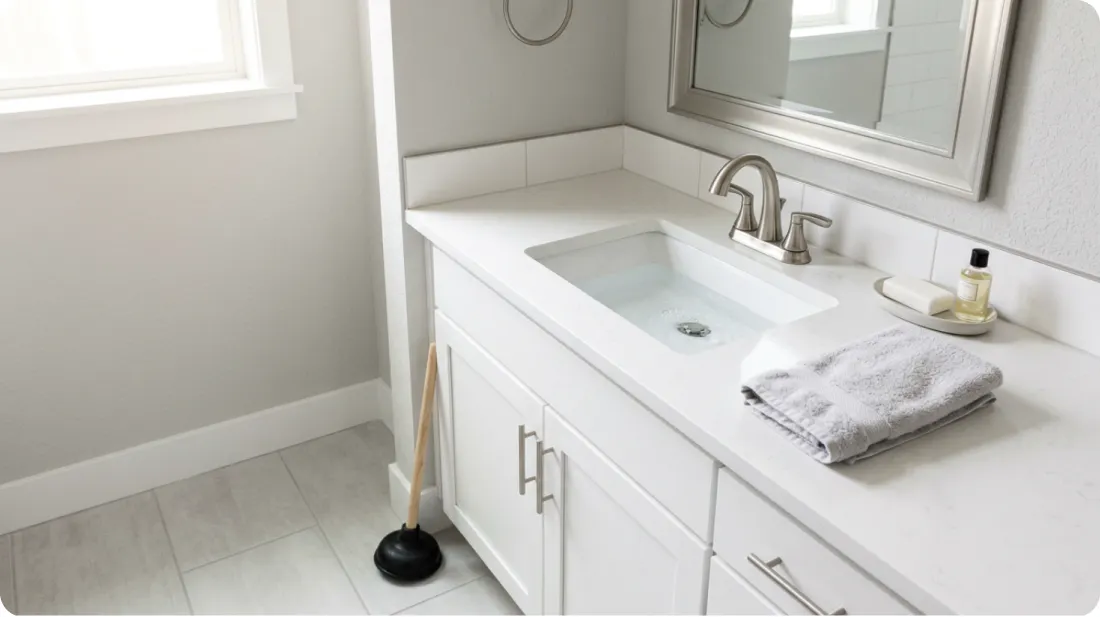
A clogged drain can make a long day even more annoying. After hours at work, you just want to eat a nice meal and have hot shower. Well, after you order takeout, you go to wash your hands in the kitchen sink, and you notice water doesn’t drain. You think to yourself, “this is a tomorrow problem,” so you go to take a shower. In the shower, as you’re shampooing, water pools around your feet. “Just another Monday” you think to yourself. These seemingly non urgent problems might be easy to procrastinate, but taking the correct next steps can save you time, money, frustration, and potentially a bigger problem down the road.
The temptation may be to go on Amazon, buy the strongest chemical cleaner you can find, pour it in, and hope the problem disappears. In some cases that may work, but that is not always the safest or smartest first step. A drain clog can be a simple hair buildup close to the fixture, a kitchen grease plug in the trap, or a warning that the issue is deeper in the plumbing system.
The goal is not to become a plumber overnight. The goal is to identify what kind of problem you have, try the safest reasonable fix, and know when to stop before a small issue turns into a bigger one so you can call a pro. Exactly why HomeFlash was created.
Not sure whether you are dealing with a simple fixture clog or something deeper? HomeFlash helps you capture the issue, work through the details that matter, and choose a clearer next step.
Before you buy anything or take the drain apart, answer these questions:
A single slow sink, shower, or tub is often a local clog that may respond to basic tools. Multiple fixtures acting strange is different. If flushing a toilet affects the shower, the kitchen sink backs up while the dishwasher runs, or several drains are slow at once, the problem may be in a shared branch line, vent, or main drain. That is the point where a professional is usually the safer call.
Do not treat every clog like a hair ball. Stop DIY troubleshooting and contact a licensed plumber promptly if:
A whole-home drainage issue is not the place for stronger chemicals, extra plunging, or guesswork.
Bathroom sinks often slow down gradually. The pop-up stopper catches hair, toothpaste, skincare residue, and soap buildup. Start by removing and cleaning the stopper. If the sink is still slow, a plastic barbed drain tool may pull out the clog just below the opening.
Read next: Slow Draining Sink: What It Means and How to Fix It
Kitchen sinks clog for different reasons. Grease coats pipe walls, then catches food particles, coffee grounds, rice, pasta, and other debris. If the sink is only slow, hot tap water and dish soap may help with fresh grease residue. If it is fully blocked, inspect the disposal, clean the trap if safe, or use a hand snake.
Read next: Kitchen Sink Drain Clogged: Grease, Food, and What Actually Works
A shower drain can be slow because of a simple hair clog close to the surface. But if the tub is also slow, water rises when another fixture runs, or gurgling comes from nearby drains, do not assume the problem is just hair.
Read next: Shower Drain Slow? Is It a Hair Clog or a Pipe Issue?
Bathtub drains are often a good DIY candidate when only the tub is affected. Hair wraps around the stopper and catches soap scum, conditioner, and mineral deposits. Remove visible buildup before using a plunger or hand snake.
Read next: Bathtub Drain Clogged? Before You Call a Plumber, Try This First
A basement, laundry-room, or garage floor drain can clog with lint, dirt, sediment, and debris. Because it may connect to a larger branch or main drainage system, recurring floor-drain issues deserve more caution, especially if there is sewage odor, standing water, or multiple fixtures acting up.
Put on gloves. Remove the drain cover or stopper where practical, shine a flashlight inside, and pull out hair, soap buildup, or food residue that is easy to reach. In bathrooms, a plastic barbed tool is usually a better first purchase than a bottle of caustic cleaner.
Common product examples:
These names are examples, not endorsements. Match the tool to your fixture and follow the manufacturer instructions.
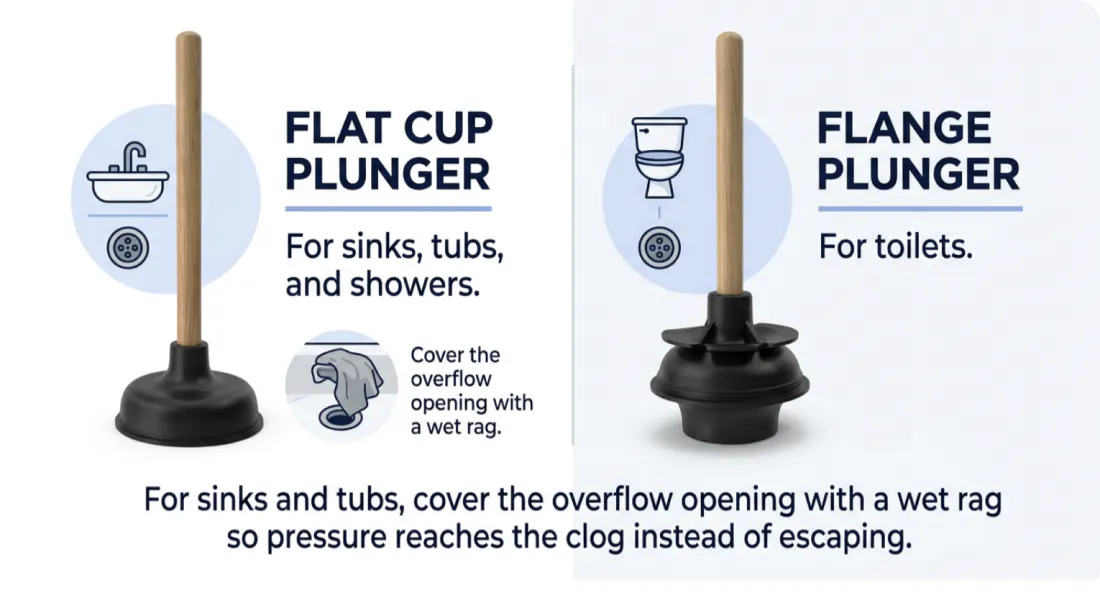
A flat cup plunger is for sinks, tubs, and showers. A flange plunger is for toilets. For sinks and tubs, cover the overflow opening with a wet rag so pressure reaches the clog instead of escaping.
Read next: Plunger Not Working? Try This Before Calling Anyone
If the drain remains blocked after visible debris removal and proper plunging, a hand snake can reach farther into a local branch line. Feed it slowly. Rotate gently. Pull debris out rather than forcing it deeper.
Common product examples:
RIDGID describes its 25-foot EZ Spin model as designed for sink, tub, and shower blockages in smaller drain lines; check the manufacturer specifications and your fixture before purchase.
Read next: How to Use a Drain Snake the Right Way
Gel drain cleaners are common retail products, but they are not a universal answer. Some are marketed for hair, soap scum, grease, and standing-water clogs. For example, Drano Max Gel is marketed for hair, soap scum, and grease, while Liquid-Plumr offers hair-clog and urgent-clog products.
However, product labels, compatibility warnings, and local conditions matter. Never mix products. Never use a plunger, hand snake, or open the trap after adding chemical cleaner. If the product fails or the drain remains blocked, stop and disclose the product used to a plumber.
For Product comparisons, check out Shower Drain Slow? Is It a Hair Clog or a Pipe Issue?
Once the drain seems clear, run water for one to two minutes. If you removed a trap, check carefully for leaks. If the drain slows again within days, that is useful diagnostic information: the blockage may be deeper, the pipe may have heavy buildup, or the issue may involve a larger drainage problem.
What not to do
Baking soda and vinegar: where it fits
Baking soda and vinegar can be a mild maintenance tool after you remove visible debris. It may help with odor or light residue, but it will not reliably remove a compact hair mass, hardened grease plug, foreign object, or main-line problem.
Read next: Baking Soda and Vinegar for Drains: Does It Actually Work?
When it is probably a pipe or main-drain issue
Call a plumber if you notice:
Those symptoms can point to a blocked branch line, venting issue, sewer lateral problem, or another condition that is not safely solved from the fixture opening.
Situation | Reasonable first tool | Common retail examples | When to stop and call a pro |
|---|---|---|---|
Bathroom sink: hair or soap buildup | Remove the stopper and use a plastic barbed drain tool | Zip-It-style tool; Drain Weasel-style tool | The clog returns quickly, the sink leaks, or other nearby fixtures are also slow |
Shower: likely local hair clog | Remove the drain cover and use a plastic hair-removal tool | Plastic barbed hair tool; drain cover; silicone hair catcher | The tub or other fixtures are also slow, water backs up elsewhere, or you smell sewage |
Bathtub: hair and soap-scum buildup | Remove visible hair first, then use a plastic tool and flat cup plunger if needed | Flat cup plunger; plastic drain tool; manual hand snake | Water rises in the tub when another fixture runs, the clog quickly returns, or there is water damage |
Kitchen sink: food or grease clog | Check the P-trap, then use a flat cup plunger or manual hand snake if necessary | Flat cup plunger; bucket; manual drum auger | The garbage disposal has a problem, the clog keeps returning, both basins back up, or multiple fixtures are affected |
Deeper clog in one fixture only | Use a manual hand snake carefully after visible debris removal and proper plunging | RIDGID-style 15–25 ft manual hand snake; similar household drum auger | The cable binds hard, will not advance, returns no debris, or the drain does not improve after one or two careful attempts |
Multiple fixtures backing up | Do not escalate DIY troubleshooting | — | Contact a licensed plumber promptly. This may indicate a shared branch-line, main-drain, sewer, or venting issue |
Before you call a pro, see if you can fix it yourself. Simple, no-nonsense guides for the most common drain problems.

How to Unclog a Toilet Without a Plunger
No plunger? No problem. Here are 5 proven ways to unclog a toilet using stuff you already have at home, step by step.
Sep 30, 2026
Learn more
Kitchen Sink Drain Clogged: Grease, Food, and What Actually Works
Kitchen sink clogged? Learn how to clear grease and food buildup safely, when to clean the P-trap, and when a plumber is the smarter call.
Sep 30, 2026
Learn more
Bathtub Drain Clogged? Before You Call a Plumber, Try This First
Bathtub drain clogged? Start with this hair and soap-scum removal checklist, use the right tools safely, and know when a plumber is necessary.
Sep 30, 2026
Learn more
Baking Soda and Vinegar for Drains: Does It Actually Work?
Can baking soda and vinegar unclog a drain? Learn what this DIY method can help with, what it cannot fix, and safer options for real clogs.
Sep 30, 2026
Learn more