We’ve all been there. You’re in the shower, water begins to pool around your ankles. “This is a tomorrow problem,” you think to yourself. Well, tomorrow turns into a few days, and a few days turns into a week. Before you know it, your ankles are fully submerged every time you take a shower. You think you might have to wash your feet as soon as you step out of the shower because they were just soaking in dirty residue. Gross. That tomorrow problem is now a today problem (it’s actually a yesterday problem, you’re just finally deciding to handle it today) and you start thinking about plumbing bills before you have even looked under the stopper.
For a bathtub that is the only slow fixture in the bathroom (meaning the sink does not drain slowly), the most common explanation is straightforward: hair plus soap scum. Hair wraps around the stopper or catches in the first section of pipe. Conditioner, body wash, soap residue, and hard-water minerals bind to it until the water pathway gets smaller and smaller.
This article is the practical, hands-on cleanup guide. Before you call a plumber, start here, provided you do not have signs of a deeper pipe problem. If your tub and shower are both slow, another fixture changes the tub water level, or you smell sewage, read Shower Drain Slow? Is It a Hair Clog or a Pipe Issue? first.
For the complete drain hub, visit How to Unclog a Drain.
Before you Google your way through five different bathtub-clog theories, snap a photo in HomeFlash. We'll tell you if this is the usual hair-and-soap-scum situation or something that needs a plumber.
Hair is rarely the only problem. A few strands by themselves may pass through the pipe. The trouble starts when hair catches around stopper hardware or a rough spot in the drain. Then soap scum, conditioner, body wash, shaving residue, and mineral deposits attach to it.
Over time, the mixture becomes a sticky mat. Water still gets through at first, which is why tub clogs often develop gradually. Then one day the tub takes 20 minutes to drain, or water stays put entirely.
If only the tub is affected, this is often a reasonable DIY repair. If multiple fixtures are involved, do not treat it like a surface hair clog.
Before buying a large snake or chemical product, start with a simple kit:
Bathtub stoppers are not all the same. Common styles include toe-touch, lift-and-turn, push-pull, trip-lever, and pop-up stoppers.
Some lift out. Others unscrew. Trip-lever systems may connect to a linkage behind the overflow plate. Do not force a stopper you do not understand. Take a photo, look up the fixture style, or use a plastic tool around the opening if removing it seems likely to create a new problem.
When you can remove the stopper safely, clean every part of it. Hair often wraps around the lower stem where you cannot see it from above.
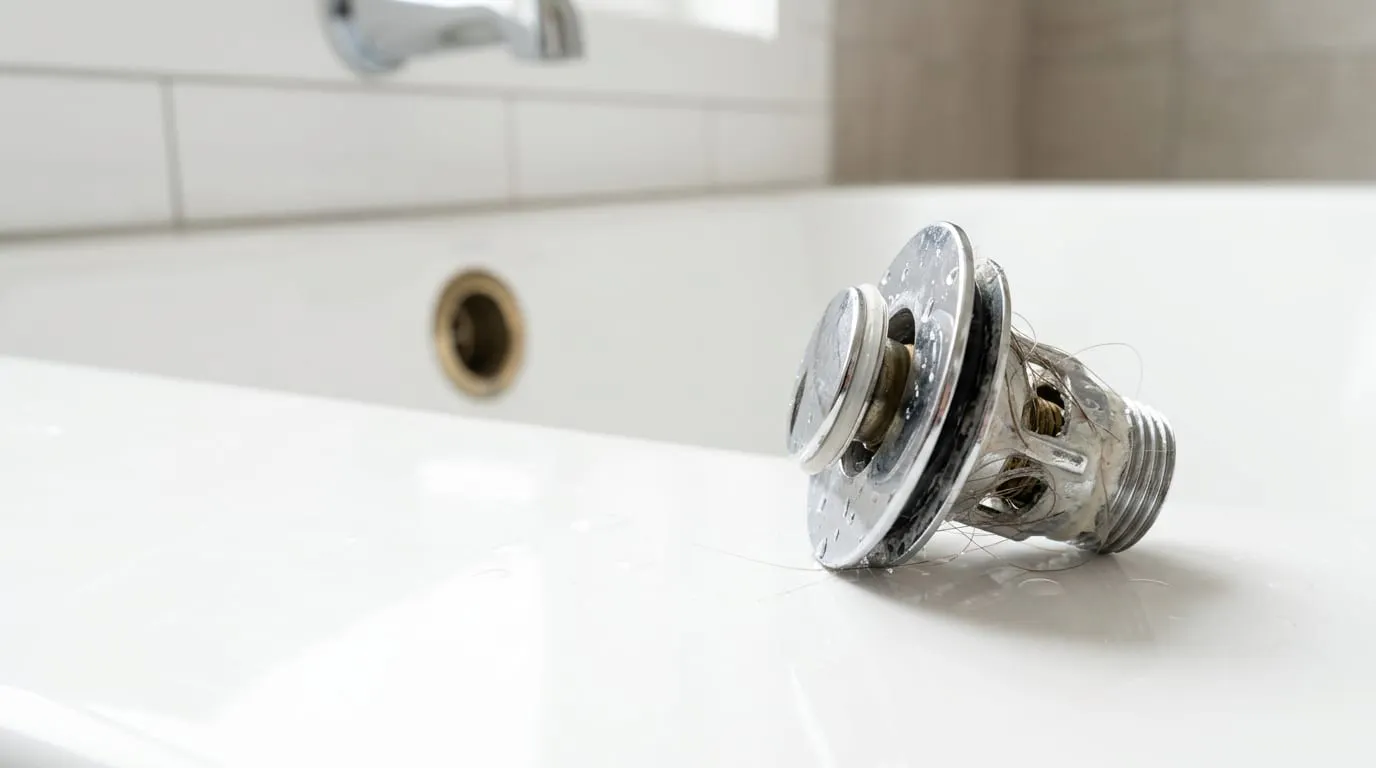
Use a plastic barbed tool or flexible drain cleaner. Slide it slowly into the opening, twist lightly, and pull it back out. Expect a hair-and-soap clump. Repeat until the tool comes out mostly clean.
This is the step that solves many bathtub clogs. It is more direct than pouring in a liquid and lets you see the likely cause with your own eyes.
If the tool pulls out a large clump and the water begins draining better, run warm tap water for a minute to test. Avoid boiling water.
If the tub is still slow, use a flat cup plunger. The key is the overflow plate: the metal or plastic opening on the tub wall below the faucet.
Cover the overflow plate tightly with a wet rag. Without that seal, your plunger pressure escapes there instead of reaching the clog.
For more plunger troubleshooting, read Plunger Not Working? Try This Before Calling Anyone.
If you removed hair, used a plunger, and the tub is still slow, but no other fixtures are affected, a manual hand snake may be appropriate.
Feed it slowly. Rotate gently when you meet resistance. Pull back and clean the cable. Do not force it through hard resistance; a tub drain may have bends and stopper linkages that do not respond well to aggressive cable work.
RIDGID-style manual 25-foot snakes are common home-center options for sink, tub, and shower applications, but the tool is not a substitute for a diagnosis. Use it only as directed for the pipe size and fixture.
Read How to Use a Drain Snake the Right Way before you start.
Products marketed for hair clogs may be widely available through Amazon, Lowe’s, Home Depot, and other retailers . Examples include Drano Max Gel and Liquid-Plumr Hair Clog Eliminator, which manufacturers market for hair, soap scum, and related drain buildup.
A gel may be an option only when you have read the label, the product is appropriate for your plumbing, and you are not planning to plunge, snake, or remove plumbing afterward. It is not the best first move when you can see or strongly suspect a physical hair mass.
If you choose a gel:
Call a licensed plumber when:
Those are signs that the project may be beyond a bathtub hair-and-soap cleanup.
Use a drain catcher that fits your tub, remove hair after showers, and clean the stopper monthly. A small preventive habit is much easier than waiting for a full blockage.
Before you call a plumber for a bathtub drain, try the simple, visible things first: clean the stopper, remove the hair, and use the right tool safely. Most tub clogs come down to hair and soap scum, and most of them respond to the steps in this guide.
The harder question is knowing which category your tub falls into before you start. HomeFlash helps with that. Take a photo of your stopper, the tub, or the water level, and HomeFlash walks you through the same checks covered here: whether the tub is the only slow fixture, which stopper style you have, and whether a plunger or a hand snake is the right next tool. You get plain instructions for each step, along with safety notes before you touch a linkage or use a chemical product.
If the symptoms point to something beyond a hair-and-soap clog, such as multiple slow fixtures or water backing up somewhere else, HomeFlash tells you that directly and can connect you with a local plumber instead of leaving you to guess.
For the diagnostic version of this problem, read Shower Drain Slow? Is It a Hair Clog or a Pipe Issue?. For every drain type, return to How to Unclog a Drain.
More plain-English repair guides from the HomeFlash library.

How to Unclog a Toilet Without a Plunger
No plunger? No problem. Here are 5 proven ways to unclog a toilet using stuff you already have at home, step by step.
Sep 30, 2026
Learn more
Kitchen Sink Drain Clogged: Grease, Food, and What Actually Works
Kitchen sink clogged? Learn how to clear grease and food buildup safely, when to clean the P-trap, and when a plumber is the smarter call.
Sep 30, 2026
Learn more
Baking Soda and Vinegar for Drains: Does It Actually Work?
Can baking soda and vinegar unclog a drain? Learn what this DIY method can help with, what it cannot fix, and safer options for real clogs.
Sep 30, 2026
Learn more
Slow Draining Sink: What It Means and How to Fix It
A slow draining sink is usually hair, soap, grease, or buildup. Learn how to diagnose the cause, clear it safely, and know when the clog is deeper.
Sep 30, 2026
Learn more