Baking soda and vinegar is one of the internet’s favorite drain remedies. It is inexpensive, uses products many homeowners already have, and creates a dramatic fizz that makes it feel like a powerful reaction must be happening inside the pipe.
The honest answer is more limited: this method can help freshen a drain, loosen mild residue, and support light maintenance after you remove visible debris. It is not a dependable fix for a compacted hair mat, heavy kitchen grease, a foreign object, or a deeper drainage problem.
The best way to use it is to understand what it can do, and what it cannot.
For a complete tool-by-tool guide, visit How to Unclog a Drain.
Wondering if baking soda and vinegar will actually clear what's in your drain? Show HomeFlash a photo of the clog and we'll tell you if this is one of the cases where it helps, or if you're about to wait 30 minutes on a reaction that was never going to work.
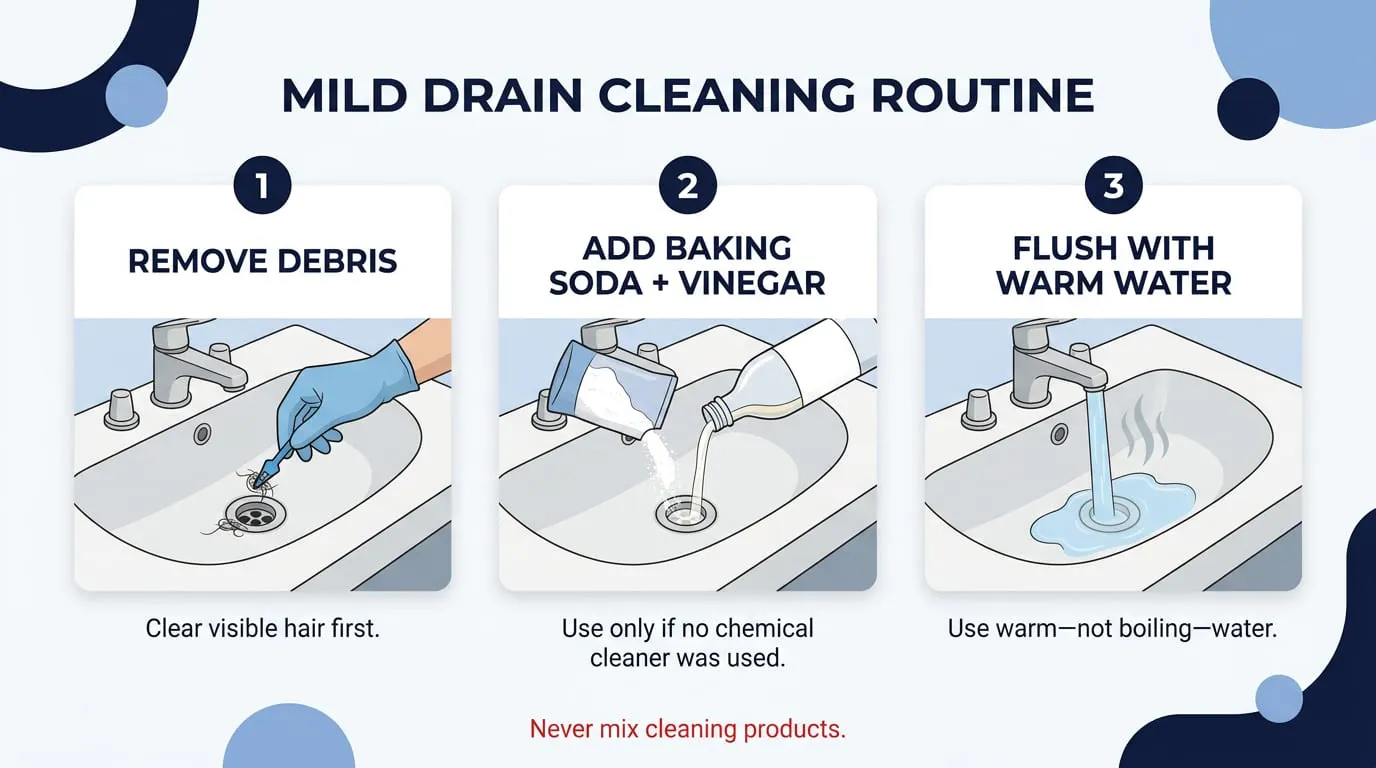
Baking soda is a base and vinegar is an acid. When combined, they release carbon dioxide gas and fizz. That bubbling can agitate loose residue near the drain opening. It may help with mild odor, light soap film, or fresh organic buildup.
What it does not create is sustained mechanical force. A compact ball of hair, a plug of grease, or an object stuck in a pipe usually needs to be removed, pulled, plunged, or professionally cleared.
Use baking soda and vinegar only when:
It is best viewed as a mild maintenance step, not a substitute for a drain tool.
Skip it if:
Those situations call for a more direct tool or a licensed plumber.
If nothing changes, do not keep repeating the same process. Move to a physical method.
Hair clogs are physical knots. Soap and conditioner make them sticky, but the main problem is still a tangled mass. Fizz can move around the outside of the clog without removing it.
For shower and tub hair clogs, first decide whether the issue is local or deeper in the plumbing: Shower Drain Slow? Is It a Hair Clog or a Pipe Issue?. For a bathtub-only, hair-and-soap cleanup workflow, read Bathtub Drain Clogged? Before You Call a Plumber, Try This First.
Grease coats the pipe and catches food particles. Baking soda and vinegar may freshen the line, but they do not reliably cut through a thick grease plug. Hot tap water and dish soap can help with a fresh, mild slowdown; a blocked kitchen line may require trap cleaning, plunging, or a hand snake.
Read Kitchen Sink Drain Clogged: Grease, Food, and What Actually Works.
Gel cleaners such as Drano Max Gel and Liquid-Plumr products are marketed for specific clog types, including hair, soap scum, grease, and standing-water clogs.
Baking soda and vinegar is gentler but weaker. Gel cleaners may be stronger, but they can be hazardous, are not compatible with all situations, and make later plunging, snaking, or trap removal unsafe. Neither option replaces correct diagnosis.
Cost is one of the clearest differences. A full baking soda and vinegar treatment costs well under two dollars in product actually used, since a box of baking soda and a jug of vinegar last for many treatments. Gel cleaners are single-use by comparison. A bottle typically runs $6 to $10 and gets used up in one or two applications, especially on a stubborn clog.
The environmental and safety trade-off runs the same direction. Baking soda and vinegar are non-toxic, biodegradable, and safe for septic systems, kids, and pets if a small amount is accidentally touched. Gel cleaners rely on caustic chemicals strong enough to break down organic material, which is exactly what makes them effective on tougher clogs and exactly what makes them something to keep off skin, out of eyes, and out of the drain more often than necessary.
That is the real trade-off: baking soda and vinegar costs less and carries less risk, but that is also why it cannot do what a stronger chemical or a mechanical tool can.
If you use a gel product, read the label, use only one product, keep people and pets away from the drain, and do not mix it with any other cleaner. Drano's official instructions warn against splashing and instruct users to keep hands and face away from the drain area.
Bottom line, if you don’t have a gel product in your home, baking soda and vinegar is a cost effective and environmentally option for certain scenarios such as a slow draining bathroom sink.
If you’re unsure which gel to buy, you might want to take a look at Shower Drain Slow? Is It a Hair Clog or a Pipe Issue?
Problem | Better first option than a pantry remedy |
|---|---|
Hair at drain opening | Plastic Zip-It-style tool or Drain Weasel-style tool |
Sink/tub local pressure clog | Flat cup plunger |
Deeper single-fixture clog | 15-25 ft hand snake, such as a RIDGID-style manual snake |
Kitchen grease/food | Trap check, hot tap water + dish soap for slow flow, hand snake if needed |
Multiple backups | Licensed plumber, not products |
Call a professional if the clog returns, multiple drains are slow, wastewater is present, you hear repeated gurgling, or you have already used products without success.
The internet has a lot of one-size-fits-all drain advice, and pantry remedies like this one get repeated everywhere without much nuance about when they actually apply. HomeFlash skips the guesswork. Snap a photo of what you're dealing with, and HomeFlash helps you start with the situation in front of you: what you are seeing, what else in the home is affected, and which next step is actually reasonable, whether that's a mild maintenance step like this one or a tool built for a real clog.
Return to How to Unclog a Drain or read How to Use a Drain Snake the Right Way for a mechanical alternative.
More plain-English repair guides from the HomeFlash library.

How to Unclog a Toilet Without a Plunger
No plunger? No problem. Here are 5 proven ways to unclog a toilet using stuff you already have at home, step by step.
Sep 30, 2026
Learn more
Kitchen Sink Drain Clogged: Grease, Food, and What Actually Works
Kitchen sink clogged? Learn how to clear grease and food buildup safely, when to clean the P-trap, and when a plumber is the smarter call.
Sep 30, 2026
Learn more
Bathtub Drain Clogged? Before You Call a Plumber, Try This First
Bathtub drain clogged? Start with this hair and soap-scum removal checklist, use the right tools safely, and know when a plumber is necessary.
Sep 30, 2026
Learn more
Slow Draining Sink: What It Means and How to Fix It
A slow draining sink is usually hair, soap, grease, or buildup. Learn how to diagnose the cause, clear it safely, and know when the clog is deeper.
Sep 30, 2026
Learn more