The water’s rising, you just flushed, but nothing’s going down. You look around, there’s no plunger in sight. Definitely not a fun situation to be in. If you’re reading this, odds are you’re in that situation right now. So we are just going to cut right to the chase. Don’t worry though, you have more options than you think, most of them using stuff already under your sink. Here’s exactly what to do, no plunger required.
Okay, clog it is. Here’s how to clear it without a plunger.
If the bowl is already full or close to overflowing, do not flush again. Every flush adds more water on top of a blockage that isn’t draining. If the water is dangerously close to the rim, take the tank lid off and close the flapper by hand (or hold the float up) to stop more water from entering the bowl, then start on one of the methods below.
The water level after a failed flush is a useful diagnostic clue. If the bowl drains slowly but doesn’t overflow, that’s a partial clog, which is good news since it responds well to almost any method below. If the water rises high and stays high with no movement, that’s a fuller blockage, and you’ll want to start with the stronger methods (hot water and soap, or the wire hanger) rather than the gentler baking soda approach. If flushing causes water to rise in both the toilet and a nearby shower drain or tub, stop entirely. That points to a blockage in the main line, which no amount of dish soap or hot water will fix. That’s a call-a-plumber situation, not a DIY one.
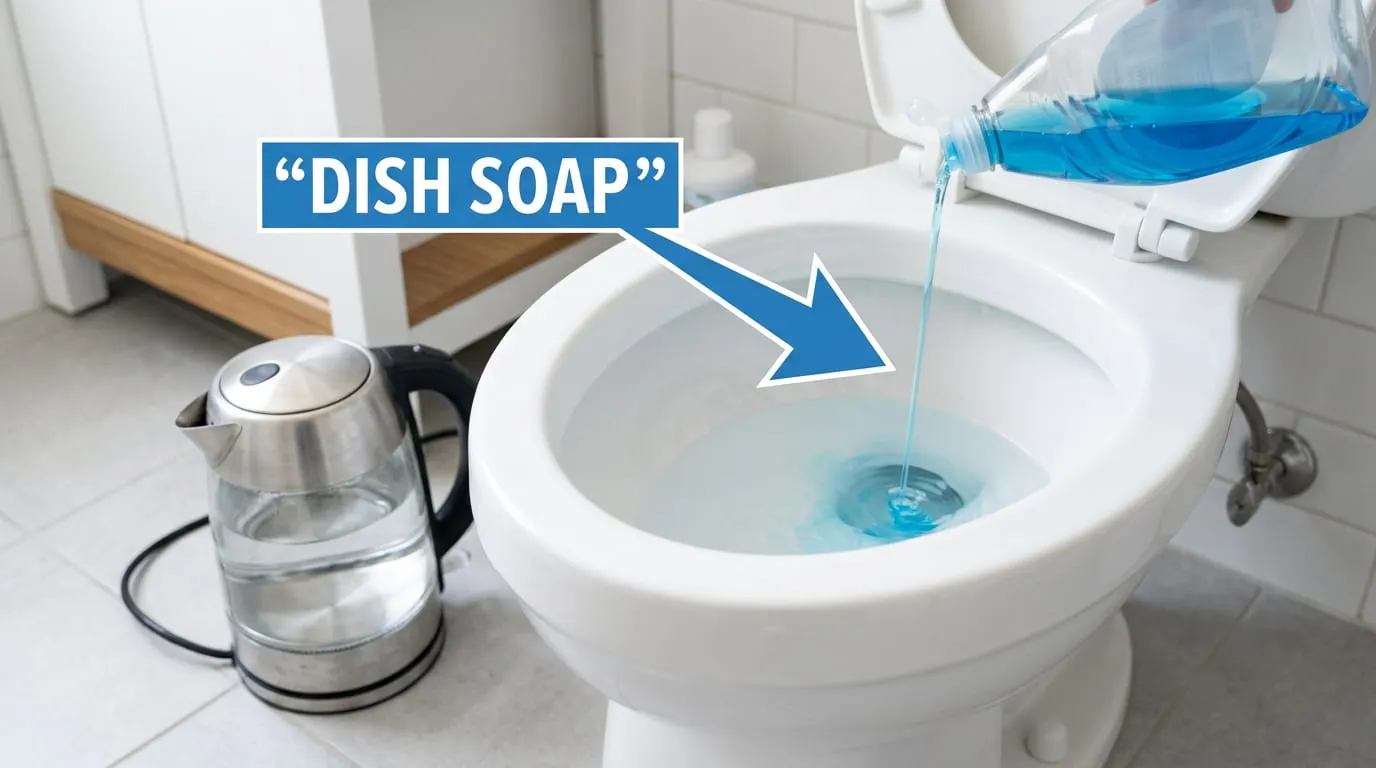
This works because dish soap lubricates the pipe and breaks down grease-based clogs, while hot water helps soften whatever’s stuck.
Cost: $0 if you already own dish soap. Time: 15-20 minutes.
Common mistake: using boiling water straight off the stove. It feels like it should work faster, but the thermal shock against cold porcelain is a real risk, especially on older toilets. Hot tap water plus a couple of minutes on the stove is plenty.
A useful variation: if you have Epsom salt on hand, some people swap it in for dish soap. It dissolves and creates a mild abrasive scrubbing action as it moves through the water. It’s worth trying if soap didn’t fully clear things and you want another angle before a physical tool.
The fizzing reaction can help break up organic clogs (paper, waste) and it’s genuinely satisfying to watch, even if it’s a slightly gentler method than dish soap and hot water.
This works best on lighter clogs and is a good next step if Method 1 didn’t fully clear things. It’s also the gentlest option on this list, which makes it the one to reach for if you’re nervous about an older or already-cracked toilet and don’t want to add pressure with hot water or a tool.
Why it doesn’t always work on tougher clogs: the fizzing reaction is chemical, not mechanical. It has no real pushing force, so it suits soft, paper-based clogs far better than a solid or tightly packed blockage.
If soap and hot water haven’t worked, you can build a makeshift toilet snake out of a wire coat hanger.
Go slowly here. The goal is to break up the blockage, not force it further down.
Why the cloth wrap matters: bare wire against porcelain can leave fine scratches that make the surface rougher over time, and a rougher surface collects grime and encourages future clogs. The thirty seconds it takes to wrap and secure the hook is worth it.
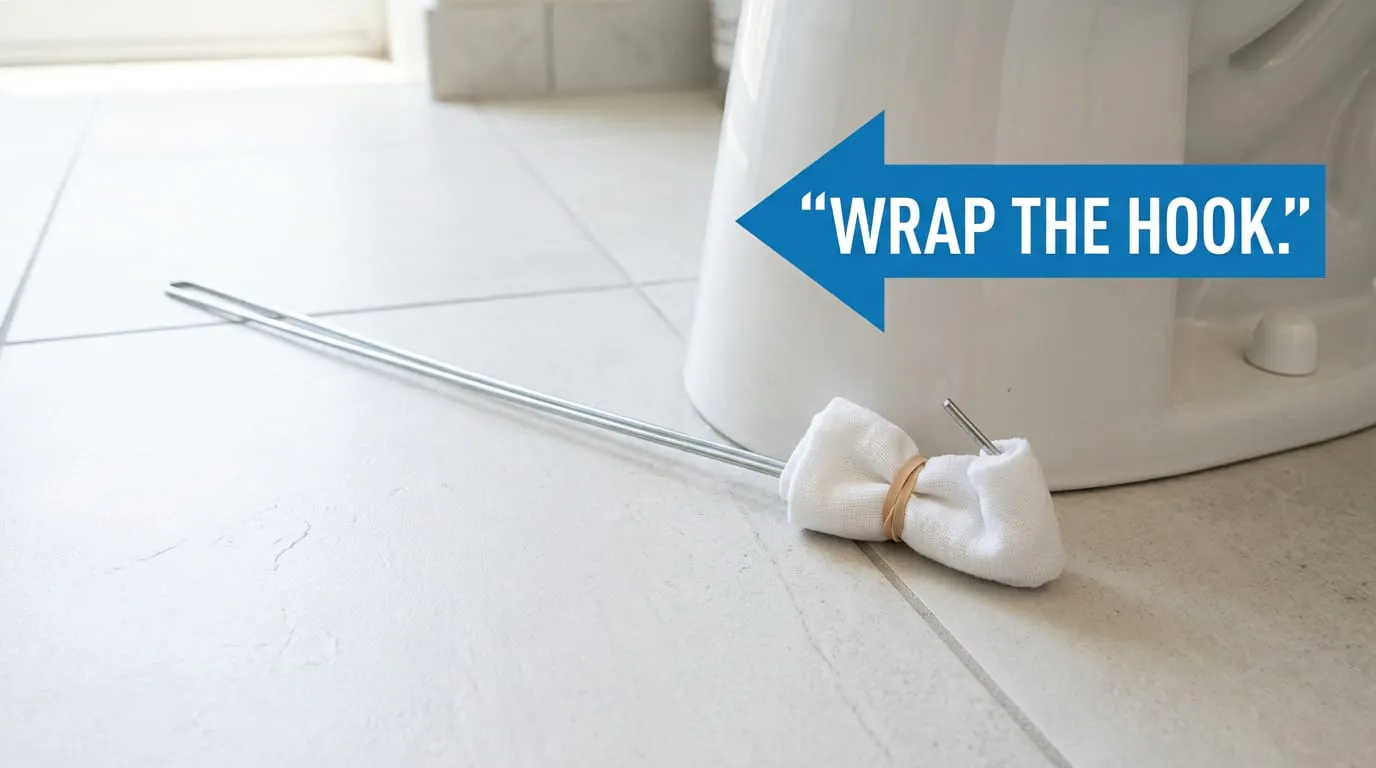
If the hanger meets resistance a few inches in, that’s likely the toilet’s internal trap, the built-in curved passage that holds water and blocks sewer gas. Don’t force it; work it gently side to side instead. Pushing too hard here is a common way people mistake normal trap geometry for a deeper clog and get the wire stuck.
Believe it or not, a standard toilet brush can work similarly to a plunger in a pinch, because it creates some of the same push-pull pressure.
It’s not as effective as an actual plunger, but it’s a reasonable stand-in. It works best on clogs close to the bowl’s outlet rather than further down the trap, since the brush handle only gives you so much reach.
For a stubborn clog, combine methods: soap first, let it sit for a full 10 minutes to really coat the inside of the pipe, then follow with hot water poured from higher up for more force. This one-two combination clears a surprising number of clogs that resisted the basic hot water method alone.
If you have an empty plastic soda bottle, cut off the bottom, remove the cap, and use the tapered neck as a makeshift plunger by pressing it into the drain and pumping up and down. The narrow neck concentrates water pressure into a smaller area, creating surprisingly effective suction for a shallow clog. It won’t outperform a real plunger, but it beats bare hands, and most households have a bottle within reach even without soap or a hanger.
If you’ve tried all five and the bowl still isn’t draining, it’s likely a clog further down the line than these methods can reach, or there’s an object lodged in the trap that needs a real snake (auger) to remove. At that point, a $25-$30 toilet auger from a hardware store will out-perform any improvised method. Or it’s a reasonable time to call a plumber, especially if this is a repeat problem, which can point to a venting issue or a larger blockage in the main line.
Watch for these red flags, which suggest the problem is bigger than these methods can solve: multiple fixtures backing up at once (toilet, tub, and sink all draining slowly), gurgling from other drains when you flush, the same toilet clogging repeatedly within days despite clearing it each time, or sewage odor that lingers after the bowl drains normally. Any of these point toward a main line or venting issue rather than a simple bowl clog, squarely a licensed plumber’s job, since pushing harder with a DIY method just risks a bigger mess.
One quick note: a clogged toilet and a running toilet are two completely different problems. A clog means water and waste aren’t draining. The bowl fills up (or won’t go down) when you flush. If you actually came here because your toilet keeps refilling itself or you hear water running when nobody’s using it, that’s a different fix, head to our running toilet diagnosis guide instead. And if you’re dealing with both a clog and a running toilet at the same time (it happens more than you’d think, especially in older bathrooms), fix the clog first using the steps below, then come back and work through the running toilet causes separately. They don’t share a root cause, so fixing one won’t fix the other.
You don’t need a plunger to clear most toilet clogs. Dish soap and hot water solves the majority of them, and a wire hanger or toilet brush can handle the rest in a pinch. Just remember: a clog and a running toilet are separate problems with separate fixes, so don’t assume solving one solves the other. If you’re dealing with a running toilet on top of everything else, our complete guide to fixing a running toilet is the place to start.
Editor’s Note
At HomeFlash we’re here to help you, the modern homeowner, in any home repair situation at any time! No matter how messy it gets. In all seriousness, we know what it’s like when panic sets in. Don’t worry though, we’re with you.
Written by Will, Founder of HomeFlash.
More plain-English repair guides from the HomeFlash library.
Kitchen Sink Drain Clogged: Grease, Food, and What Actually Works
Kitchen sink clogged? Learn how to clear grease and food buildup safely, when to clean the P-trap, and when a plumber is the smarter call.
Sep 30, 2026
Learn more
Bathtub Drain Clogged? Before You Call a Plumber, Try This First
Bathtub drain clogged? Start with this hair and soap-scum removal checklist, use the right tools safely, and know when a plumber is necessary.
Sep 30, 2026
Learn more
Baking Soda and Vinegar for Drains: Does It Actually Work?
Can baking soda and vinegar unclog a drain? Learn what this DIY method can help with, what it cannot fix, and safer options for real clogs.
Sep 30, 2026
Learn more
Slow Draining Sink: What It Means and How to Fix It
A slow draining sink is usually hair, soap, grease, or buildup. Learn how to diagnose the cause, clear it safely, and know when the clog is deeper.
Sep 30, 2026
Learn more