Snap a photo, and HomeFlash’s AI diagnoses the problem in about 60 seconds, free. No plumber, no guesswork, no waiting around while your water bill climbs.

What is your toilet doing right now? Pick the behavior that matches, and we’ll point you to the fix.
Most of the time, the cause of a running toilet is either a faulty flapper or the fill valve. Your toilet has two main jobs: the flapper holds tank water until you flush, and the fill valve refills the tank afterward. If the flapper leaks, the fill valve repeatedly tops off the tank. If the fill valve does not shut off, water spills into the overflow tube continuously.

If your toilet runs constantly, meaning you can hear or see water moving even when nobody’s flushed, the flapper is the first thing to check. Most of the time, it’s the flapper. It’s the rubber seal at the bottom of the tank that lifts when you flush and drops back to seal the tank from the bowl. When it wears out or stops sitting flat, water slowly leaks past it into the bowl, and the fill valve keeps topping off the tank to compensate. That’s the running sound you’re hearing.
A worn flapper usually looks the part: stiff, brittle, or slightly gummy rubber, with mineral buildup or a warped edge where it no longer sits flush. Chlorine tablets and bowl cleaners dropped directly in the tank speed this up. They’re hard on rubber. If your toilet is 2-3 years old or older and uses in-tank cleaning tabs, a degraded flapper should be your prime suspect.
Important to note:
Flappers aren’t one-size-fits-all despite “universal” labeling. Standard 2-inch flappers are most common, however 3-inch flappers became more popular in toilets made after 2000. Before you order a replacement, check the size of the opening underneath your flapper, not just the flapper itself.
Click here for step by step guidance on how to replace a flapper, or download HomeFlash.

Odds are, if the flapper isn’t the problem, the fill valve more than likely is. If your toilet runs right after you flush and just won’t shut off (or you hear hissing or a slow trickle minutes after the tank should be full), the fill valve is the more likely cause. It’s the taller mechanism on the left side of the tank that controls how much water comes in and when it stops. When its seal wears out or the float is set wrong, it can’t sense when to shut off, so it keeps feeding water, sometimes straight into the overflow tube where you’ll never notice unless you lift the lid.
Inside every fill valve is a small rubber or silicone seal that opens to let water in and closes when the float signals the tank is full. Mineral deposits from hard water build up on this seal over time, keeping it from closing fully. The problem usually starts as a faint hiss that gets louder over months. Most fill valves are rated for 5-7 years; harder water or higher pressure often means failures closer to 4-5 years.
Lift the tank lid and watch what happens after a flush.
For a step-by-step on replacing the fill valve, click here or download HomeFlash. Will tell you what’s failing with the flash of a camera.
Here are a few signs mean it’s time to call a licensed plumber instead:
HomeFlash is built to catch these moments for you. Every diagnosis includes a built-in safety flag: if what you photograph looks outside safe DIY territory, HomeFlash tells you plainly to stop and call a licensed pro. Not sure? Snap a photo and HomeFlash will tell you.
Toilet condition | Extra water wasted per day | Extra water per month | Estimated cost at $0.01/gallon |
|---|---|---|---|
Normal fill valve | 0 gallons | 0 gallons | $0 |
Small, slow overflow leak | 30 gallons | 900 gallons | $9/month |
Moderate continuous leak | 200 gallons | 6,000 gallons | $60/month |
Heavy continuous leak | 500 gallons | 15,000 gallons | $150/month |
Severe stuck-open valve | 1,000 gallons | 30,000 gallons | $300/month |
You might be wondering about money: how much will it cost me to fix a running toilet? What tools/materials will I need to fix a running toilet myself? How much would/should a plumber cost to fix a running toilet? I know this is what you’re asking because I’d be doing the same. Here’s a table to show approximately how much.
Repair | What you’ll need | DIY parts cost | Typical time | Typical plumber cost* |
|---|---|---|---|---|
Standard flapper | Replacement flapper, towel or sponge | $5–15 | 10–15 min | $100–200 |
Fill valve | Replacement fill valve, adjustable pliers or wrench, towel, small bucket | $10–25 | 20–30 min | $150–300 |
This is what HomeFlash is all about: transparency. We want homeowners to know all their options on the table so they can make educated decisions. Want to do it yourself? Nice, we’re with you every step of the way. Don’t feel comfortable and want to call a pro? No worries, we’ll connect you with the right company. At least now you know approximately how much it should cost.
Want the full step-by-step for your symptom? Browse our complete library of running toilet guides below, covering every cause from a stuck flapper to a cracked overflow tube.

Toilet Fill Valve Replacement: When and How
Learn when a running toilet means the fill valve, not the flapper, plus a full step-by-step replacement guide anyone can do in 30 minutes.
Sep 30, 2026
Learn more
Why Does My Toilet Keep Running? (7 Causes)
Toilet keeps running and you don’t know why? Here are the 7 most common causes, how to tell them apart, and how to fix each one.
Sep 30, 2026
Learn more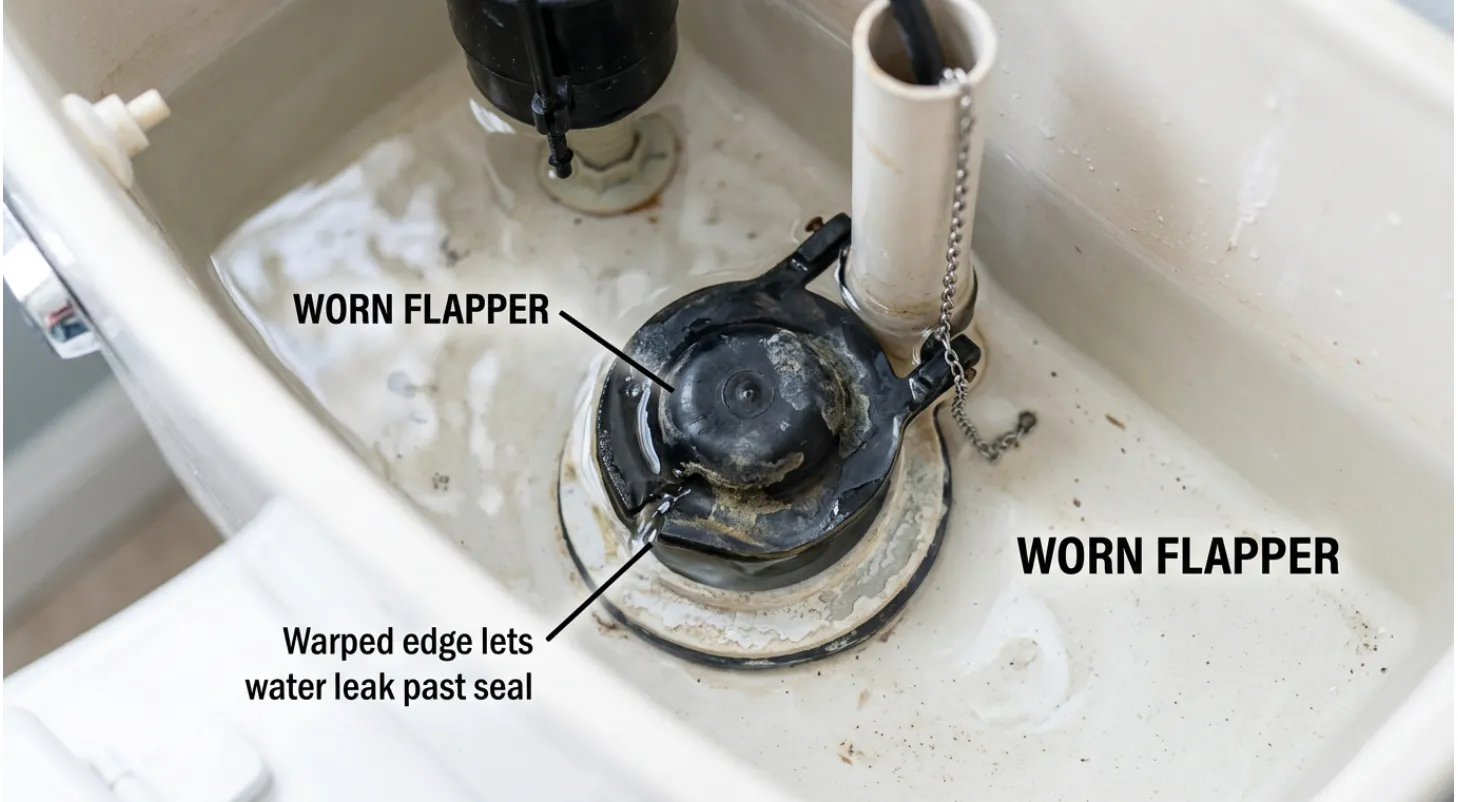
How to Replace a Toilet Flapper (Step by Step)
Toilet flapper replacement takes 15 minutes and costs $5-15. Follow this simple step-by-step guide before you call a plumber.
Aug 13, 2026
Learn more
Breaker Keeps Tripping With Nothing Plugged In: What’s Happening
A breaker that trips with nothing plugged into the circuit isn’t an overload. Learn the real causes, including a full breakdown of arc fault (AFCI) tripping, and when to call an electrician.
Sep 30, 2026
Learn more