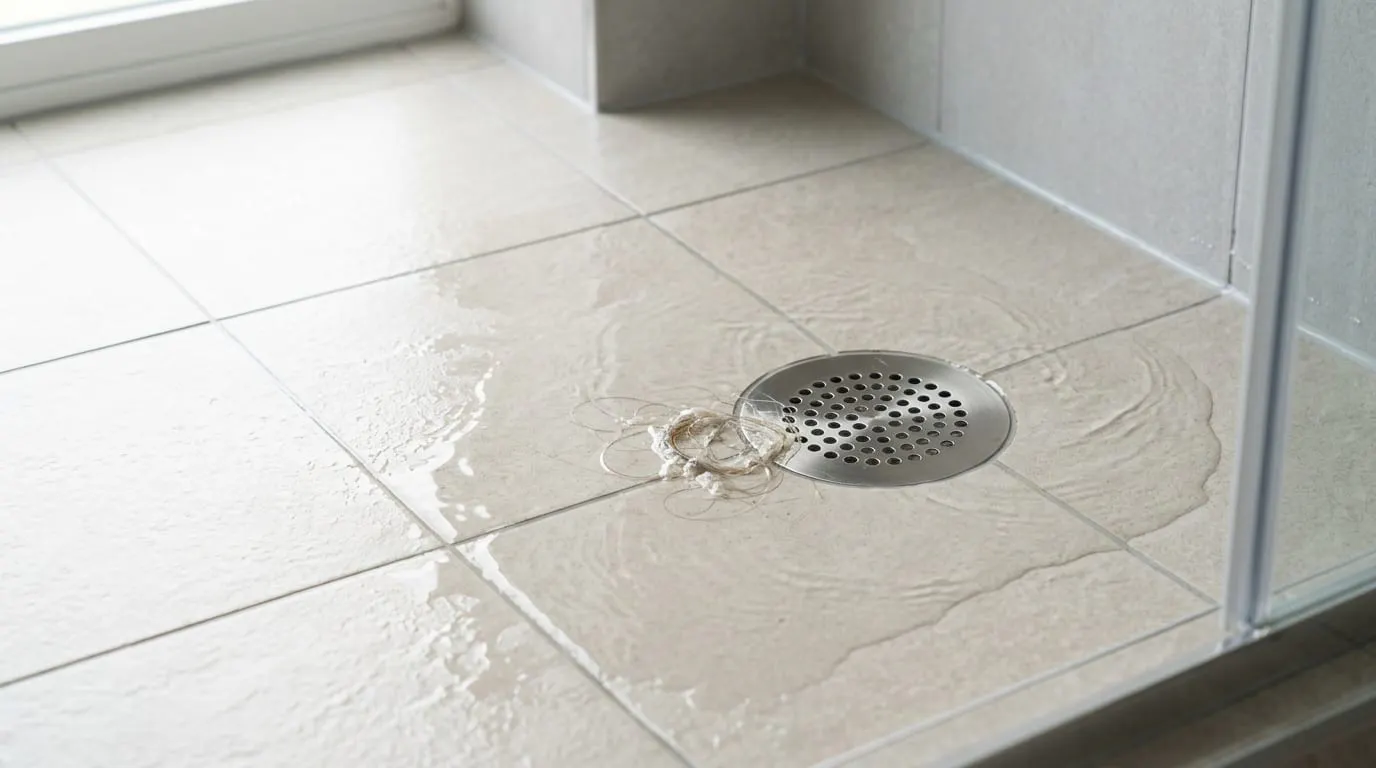
Ever been in the shower, and you notice it’s draining slower than usual? Maybe a few days later, all of a sudden that slow drain has turned into a very small puddle as soon as you turn the faucet on. By the end of the week, that small puddle accumulates to standing water. As you’re taking a shower, your feet are submerged. Soap that should be draining is now sitting at the bottom of the tub with the rest of the dirty water. The problem you just procrastinated to fix now needs your attention.
Believe it or not, every slow shower isn’t a surface hair clog. Some symptoms point to a deeper branch-line, venting, or main-drain issue. The difference matters. If you treat a pipe problem like a simple hair clog, you can lose time, add chemicals that complicate the repair, and miss the signs that a plumber should be involved.
This guide is about diagnosis first: Is this probably a shower-drain clog, or is the pipe system trying to tell you something bigger is wrong?
For the complete fixture-by-fixture guide, start with How to Unclog a Drain.
Not sure if this is a hair clog or something farther down the line? Take a photo in HomeFlash and answer a few questions. We'll tell you which one you're dealing with before you buy a single tool.
The most useful first question is simple:
This is not a guarantee, but it is a practical way to choose your next move.
First of all, A local clog is a blockage in the drain pipe for one fixture, not the main sewer line for the whole house.
Say only your shower drains slow while the sinks, toilet, and kitchen drain fine. That clog is probably local to the shower drain, its trap, or the branch pipe close by. Usually it's hair, soap scum, conditioner residue, grease, food particles, or a small object stuck near the fixture.
Think of your drains like a tree. The branches are the individual fixtures: shower, tub, bathroom sink, kitchen sink. The trunk is the main sewer line that carries everything out of the house. A local clog is a blockage in one branch. A main-line clog is a blockage in the trunk.
A local shower clog is more likely when:
In this situation, start with low-risk mechanical removal. Lift the cover, remove visible hair, and use a plastic barbed tool before considering stronger products.
These are usually easier and safer to try than a caustic gel because they address the physical hair mass directly.
If you’re unsure which drain gel to buy, here’s what you should know before you buy:
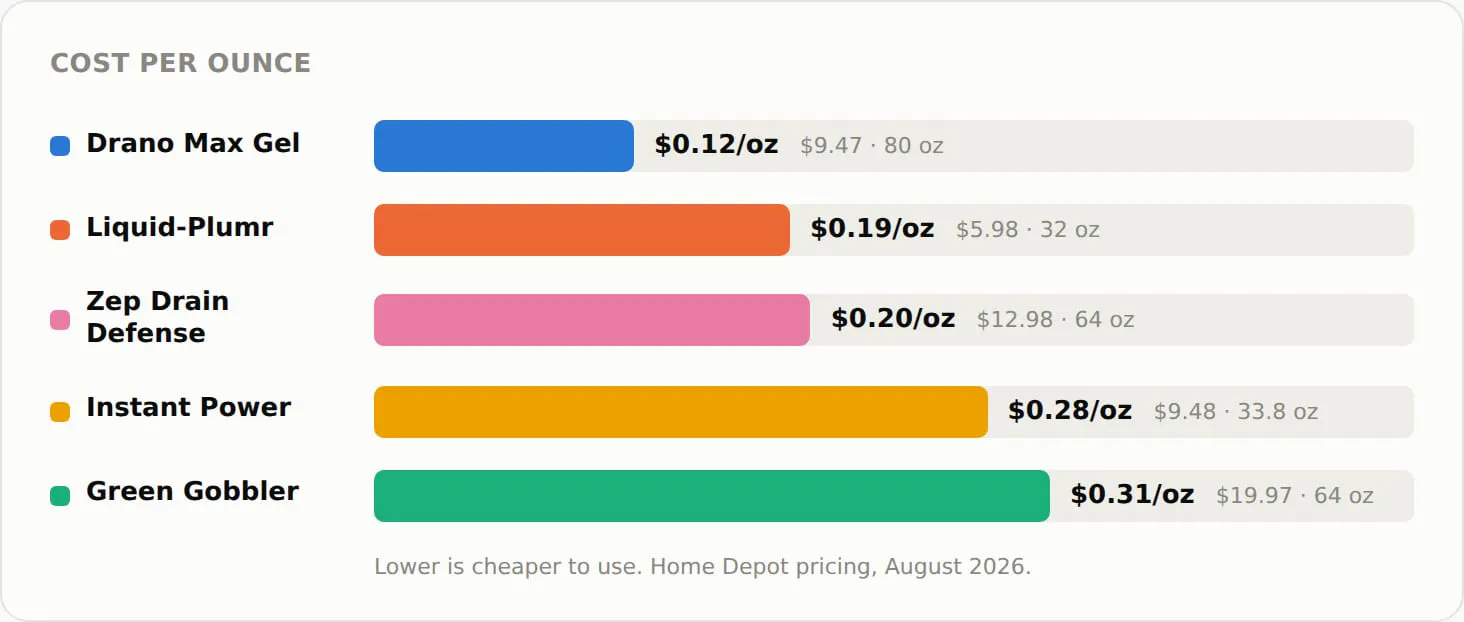
Stop assuming the issue is just hair if you notice any of the following:
In many bathrooms, the shower and tub share part of the same drainage route. If both are draining slowly, the clog may be farther down than the shower opening.
If using a nearby sink, washing machine, or toilet changes the water level in the shower, the issue may be in a shared drain line. Avoid adding more water to the system until you understand the cause.
A single brief gurgle can happen as water moves through a partial clog. Repeated gurgling from several fixtures can signal a blockage or venting problem beyond the shower drain.
If you pull out hair, water runs freely, and the problem returns within days, there may be more buildup deeper in the line or another condition that a surface tool cannot solve.
This is a stop sign. Sewage smell, gray or dark water coming up, or backup in multiple fixtures calls for a licensed plumber, not more drain products.
Remove the drain cover if it is designed to come off. Use a flashlight. If hair is visible, pull it out with gloves or a plastic tool. Do not force screws or fixture parts that are corroded or unfamiliar.
Run the shower briefly after removal. Then, with the shower off, observe whether another nearby fixture affects it. This is not about creating a flood; it is about noticing connections. If another fixture changes the shower water level, stop and call a plumber.
A plastic barbed tool is best for near-surface hair. Feed it in slowly, twist gently, and pull it out. If it comes back with a large hair-and-soap mass and the drain improves, you have useful evidence that it was local.
A flat cup plunger can help move a local clog, but only if no chemical cleaner is present. Add enough water to cover the cup, create a good seal, and use controlled strokes. If water moves into a tub or another fixture, stop.
Read Plunger Not Working? Try This Before Calling Anyone for correct setup.
A manual hand snake may help if the shower is the only affected fixture and the clog seems beyond the opening. RIDGID-style 25-foot hand snakes are common retail options for sink, tub, and shower lines, but they must be used slowly and within the manufacturer’s stated pipe-size/application limits.
Read How to Use a Drain Snake the Right Way before proceeding.
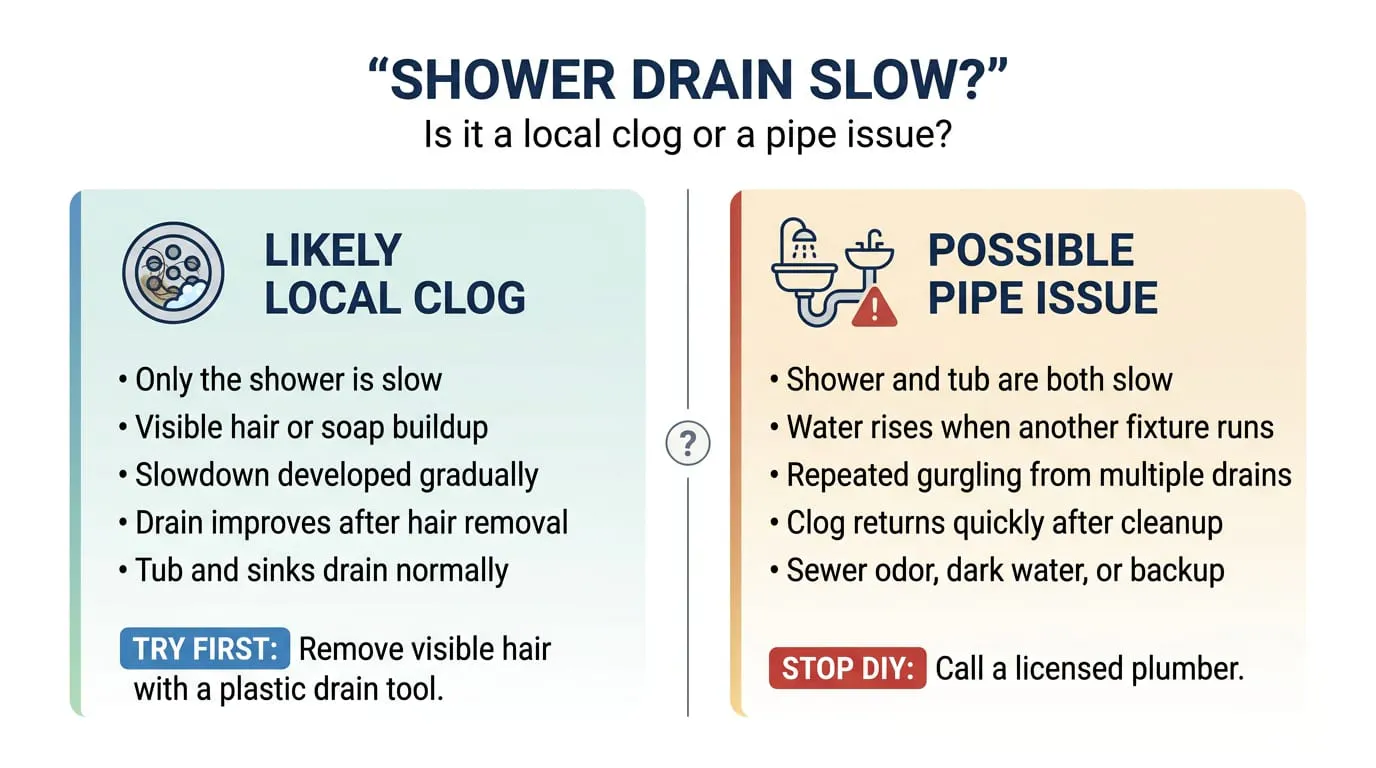
Some consumers use products marketed for hair clogs, including Drano Max Gel and Liquid-Plumr Hair Clog Eliminator. Their manufacturers market those products for certain hair, soap-scum, and standing-water clog conditions.
That does not make them the right first response for every slow shower. A gel cannot tell you whether the real problem is in a shared line, and it can create a hazard if you later plunge or snake the drain. If you choose to use one:
Call a plumber promptly if:
The most valuable question isn’t “What product should I buy?” It is “What problem am I actually dealing with?” Go to the root of the problem first. HomeFlash helps homeowners start there. Before we can solve the anything, we have to correctly identify the problem first. Homeflash does just that; capture the issue, consider the symptoms around it, and decide whether a simple DIY fix is reasonable or whether it is time to call a pro. The backend of our product is engineered specifically for the modern homeowner.
Unlike generic AI, we help you get to the diagnosis, you don’t need to help us get there. Generic AI’s answer is only as reliable as the information you give it. Comparatively, HomeFlash sees what you see. Based on your image, we ask you the right questions at the right time. Once HomeFlash has all the information it needs, it will tell you how confident it is and where to go from there.
If you fall and break your ankle, more likely than not you will go to the ER. From there, the attending physician will triage you to an orthopedic surgeon that specializes in ankle surgery. The ER attending physician isn’t going to operate on you in the ER because that’s not what they specialize in. That’s not to say the ER attending isn’t a good physician, they just don’t specialize in ankle surgery. Generic AI is great, but we specialize in home repair because that’s what we are engineered for.
For the hands-on hair-removal walkthrough, read Bathtub Drain Clogged? Before You Call a Plumber, Try This First. For the complete hub, return to How to Unclog a Drain.
More plain-English repair guides from the HomeFlash library.

How to Unclog a Toilet Without a Plunger
No plunger? No problem. Here are 5 proven ways to unclog a toilet using stuff you already have at home, step by step.
Sep 30, 2026
Learn more
Kitchen Sink Drain Clogged: Grease, Food, and What Actually Works
Kitchen sink clogged? Learn how to clear grease and food buildup safely, when to clean the P-trap, and when a plumber is the smarter call.
Sep 30, 2026
Learn more
Bathtub Drain Clogged? Before You Call a Plumber, Try This First
Bathtub drain clogged? Start with this hair and soap-scum removal checklist, use the right tools safely, and know when a plumber is necessary.
Sep 30, 2026
Learn more
Baking Soda and Vinegar for Drains: Does It Actually Work?
Can baking soda and vinegar unclog a drain? Learn what this DIY method can help with, what it cannot fix, and safer options for real clogs.
Sep 30, 2026
Learn more