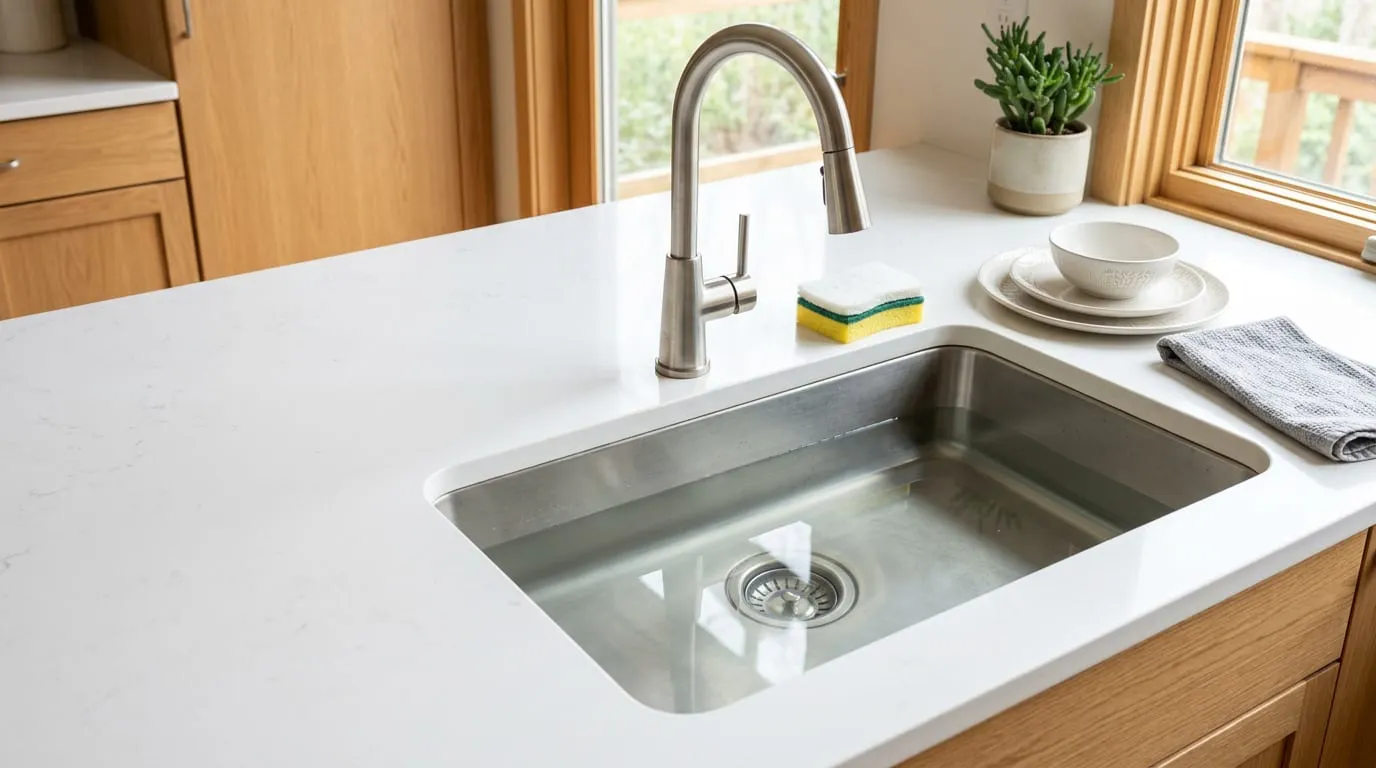
A clogged kitchen sink is an easy problem to dismiss. It’s one of those problems you know is there. I mean, every time you eat or wash your hands you’re reminded, but often times there are more pressing issues. The kids need to be put to bed, the dog needs to go out, the garbage needs to be taken out, you have to get ready for work tomorrow, and you’re trying to finish up the last season of Game of Thrones for the 5th time. Whatever it is, a clogged kitchen sink can wait.
It’s tempting to pour a powerful product down the drain and hope the sink starts moving again.
Kitchen clogs are different from bathroom hair clogs. They are usually a mix of grease, food scraps, soap residue, and sludge collecting in the trap or branch line. The safest fix depends on whether the sink is slow, fully blocked, connected to a garbage disposal, or backing up on both sides.
For the complete drain decision tree, visit How to Unclog a Drain.
Kitchen sink still backed up after everything else on your list got handled? Take a photo in HomeFlash and we'll walk you through whether this is a disposal problem, a grease problem, or one that needs a plumber, before you touch a pipe.
The usual suspects are:
Grease is especially deceptive. It goes down as a liquid, cools on the pipe walls, and catches food particles over time.
A slow kitchen sink gives you more options. Hot tap water and dish soap may help move fresh grease residue. You can inspect the disposal and prevent the buildup from becoming a solid plug.
A fully blocked sink with standing water requires more caution. Do not keep running the disposal or add water. Do not pour chemical cleaner into a sink you may need to plunge or open below the cabinet.
A disposal may be part of the issue, but never put your hand inside it.
If the disposal runs normally but water still backs up, the clog may be beyond it.
The reset button and the wrench method solve most jams. A few other problems come up often enough to cover here.
Common disposal problems, and how to safely fix them
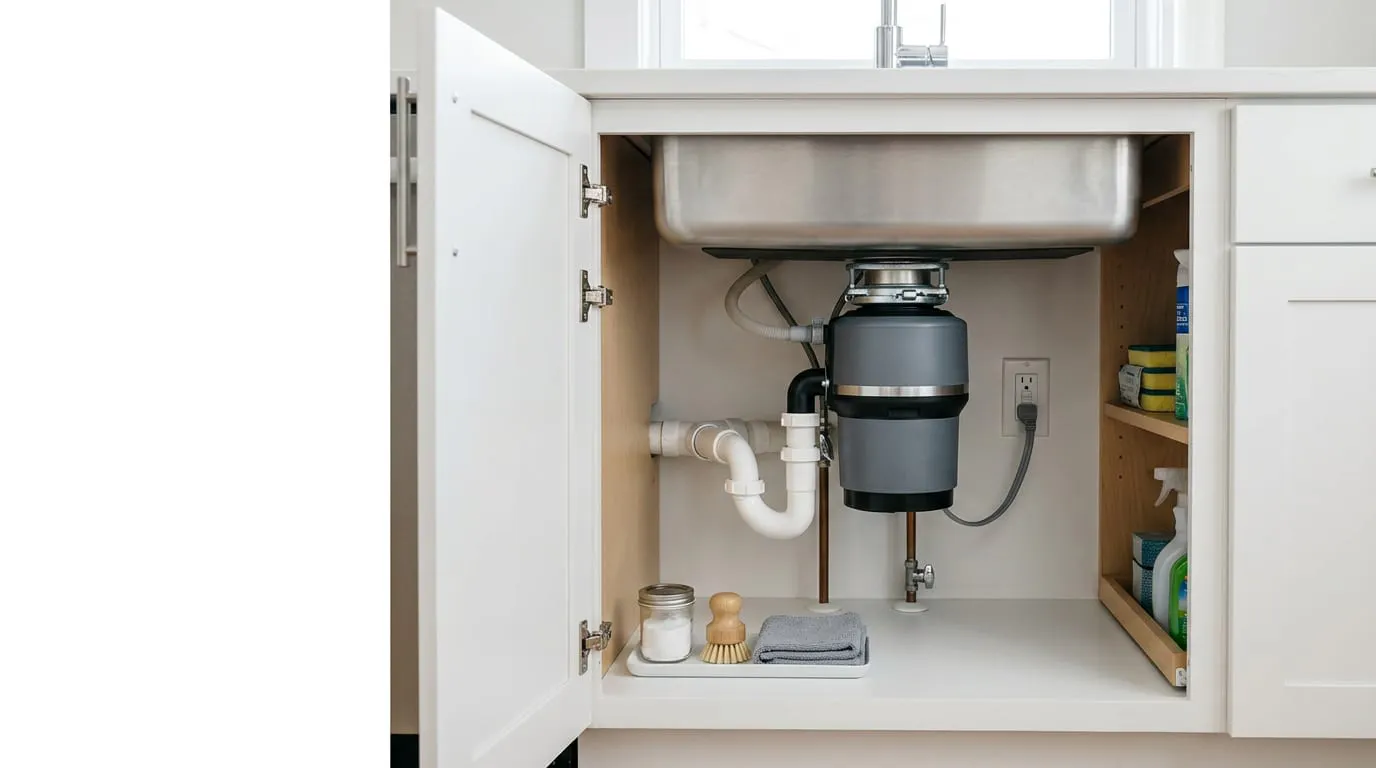
Most disposals have a small hexagonal hole in the center of the bottom of the unit, underneath the sink. If the reset button did not fix a humming-but-not-spinning disposal, this is usually the next step, and it does not require reaching inside the chamber.
If you do not have the manufacturer's hex key, a 1/4-inch hex wrench from a hardware store usually fits. Never substitute a screwdriver or pliers for this step.
If the disposal hums, resets, and jams again within a few uses, or if it keeps tripping the breaker, the motor may be failing or wired incorrectly. This goes beyond a simple jam and is a good point to call an electrician or appliance repair professional rather than keep resetting it.
A disposal that leaks where it connects to the sink flange, the dishwasher hose, or the discharge pipe usually needs new plumber's putty or a tightened connection, not a full replacement. A leak from the housing itself, lower down on the unit, usually means a worn seal inside and is a sign the unit needs to be replaced.
Food debris can sit in the splash guard or the underside of the grinding chamber even when water drains normally. Turn off the disposal, and with the power off, use tongs or a stiff brush to clean under the rubber splash guard. Running ice cubes with a handful of coarse salt through the disposal can also help scour the chamber.
Safety note: the rules from the previous section still apply here. Never put your fingers or a tool other than the hex key described above inside the disposal, even with the power off. A jammed blade can still move if it releases suddenly.
For a sink that is still draining slowly, add dish soap and run hot tap water for several minutes. This can help with fresh grease residue. It is not a cure for a solid food blockage or deep grease plug.
Do not use boiling water. Hot tap water is safer for common household plumbing materials and fixtures.
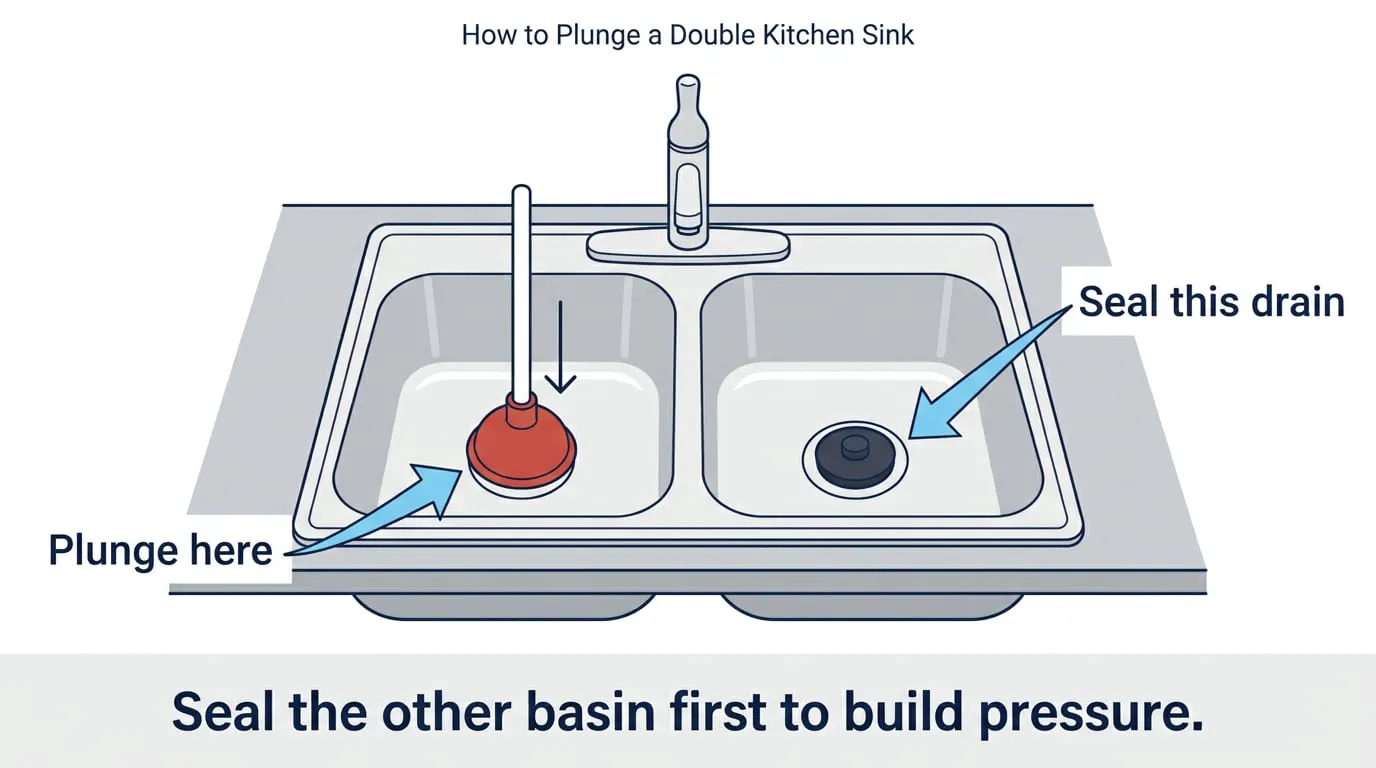
If water moves into the second basin, it may simply mean pressure is moving through the shared line. Clean it, reseal, and try one more controlled round.
The P-trap is the curved pipe under the sink. It holds water to block sewer gases and often catches food and sludge.
Before you begin:
Loosen accessible plastic slip nuts by hand, lower the trap into the bucket, clear debris, inspect washers, and reattach hand-tight. Run water slowly and check for leaks.
Stop if fittings are corroded, brittle, glued, or difficult to move.
If the trap is clear but the sink remains blocked, the clog may be farther down the branch line. A manual hand snake may help. Products such as RIDGID EZ Spin or PowerSpin-style 25-foot units are common options for appropriate household drain applications; verify pipe size and instructions before use.
For detailed technique, read How to Use a Drain Snake the Right Way.
Products such as Drano Max Gel and certain Liquid-Plumr gels are marketed for grease and food-related clogs. But they should not be your automatic next move. They may be unsafe for some plumbing systems, can create hazards when used incorrectly, and prevent you from safely plunging or opening the trap afterward.
If you choose a product, follow its exact label. Never combine it with another cleaner. If it does not work, do not escalate by adding a second product.
Even with a disposal, keep these out:
A disposal chops food; it does not eliminate the need for the pipes to carry it away.
Call a licensed plumber if:
Kitchen drain problems can look straightforward until they aren’t. A slow sink might clear with dish soap and hot water. A backed-up double basin with a failing disposal might need a professional the same afternoon. The hard part is knowing which situation you are in before you start pouring chemicals down the drain or taking the trap apart.
HomeFlash helps you make that call. Take a photo of the clog, the standing water, or the disposal, and HomeFlash walks you through the same decision points covered in this guide: whether the sink is slow or fully blocked, whether the disposal is jammed or failing, and whether the P-trap or a deeper line problem is the likely cause. You get clear next steps, safety warnings before any tool touches a disposal or a pipe fitting, and links to the specific tools and products this guide references.
If the situation calls for a plumber or an appliance repair professional, HomeFlash tells you that too, and can connect you with a local pro instead of leaving you to search on your own.
Return to How to Unclog a Drain, or read Plunger Not Working? Try This Before Calling Anyone for correct plunger setup.
More plain-English repair guides from the HomeFlash library.

How to Unclog a Toilet Without a Plunger
No plunger? No problem. Here are 5 proven ways to unclog a toilet using stuff you already have at home, step by step.
Sep 30, 2026
Learn more
Bathtub Drain Clogged? Before You Call a Plumber, Try This First
Bathtub drain clogged? Start with this hair and soap-scum removal checklist, use the right tools safely, and know when a plumber is necessary.
Sep 30, 2026
Learn more
Baking Soda and Vinegar for Drains: Does It Actually Work?
Can baking soda and vinegar unclog a drain? Learn what this DIY method can help with, what it cannot fix, and safer options for real clogs.
Sep 30, 2026
Learn more
Slow Draining Sink: What It Means and How to Fix It
A slow draining sink is usually hair, soap, grease, or buildup. Learn how to diagnose the cause, clear it safely, and know when the clog is deeper.
Sep 30, 2026
Learn more