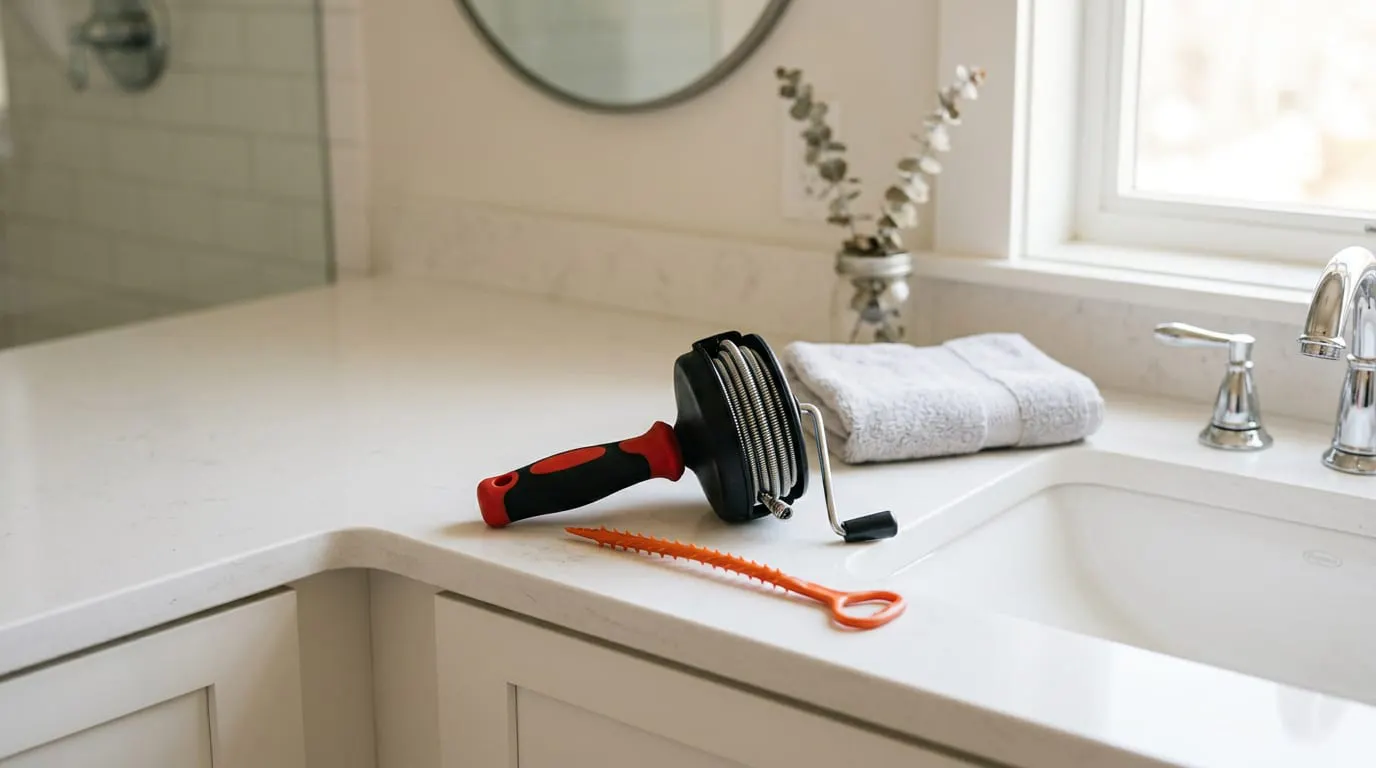
A drain snake can be one of the most useful tools in a homeowner’s basic repair kit. It reaches farther than a plunger, can pull out hair and debris, and may clear a stubborn local clog without a service call.
It can also make a problem worse when used like a power tool instead of a precision tool. The point is not to force a cable as far as possible. The point is to reach a likely clog gently, remove or loosen the material, and stop when the symptoms suggest the problem is deeper than one fixture.
For the larger drain decision tree, visit How to Unclog a Drain.
A hand snake is the right call for some clogs and the wrong one for others. Before you feed a cable into your drain, snap a photo in HomeFlash and we'll tell you if this is a snake job or something to leave alone.
Use a hand snake when:
Do not use a snake if several fixtures are backing up, sewage is present, another fixture changes the water level in the affected drain, or chemical cleaner has been used.
This is often enough for a shower, tub, or bathroom sink. If it returns clean and the drain remains blocked, the issue may be farther down.
For a bathroom sink, remove the stopper. For a shower or tub, remove the cover. For a kitchen sink, it may be safer and more effective to remove the trap first and feed the cable through the wall pipe, only if you are comfortable and no chemical product has been used.
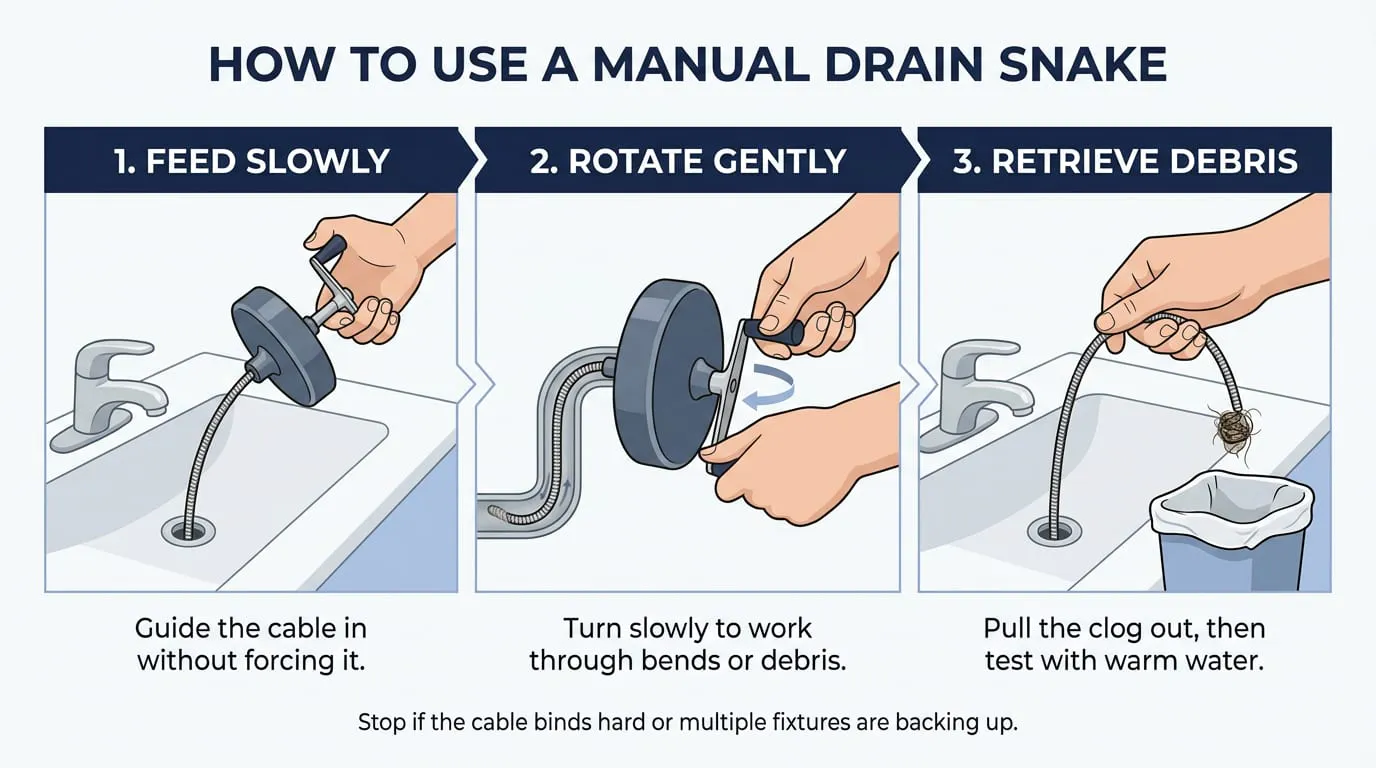
Release a short section of cable. Guide it into the drain while rotating the handle gently. Mild resistance at a pipe bend is normal.
A bend usually feels like smooth resistance that changes as you rotate. A clog may feel soft, springy, or as if the cable has caught in material. Do not jam the cable. Rotate and work slowly.
When you meet likely debris, rotate gently and pull back. Your goal is to hook or loosen material, not compact it farther down the line.
Pull the cable back slowly, wiping it with a towel. Run warm water for one to two minutes. If the drain remains slow after one or two careful passes, stop and reassess.
A hand snake is not a solution for:
If you keep getting repeat clogs, review Shower Drain Slow? Is It a Hair Clog or a Pipe Issue? for red flags or contact a licensed plumber.
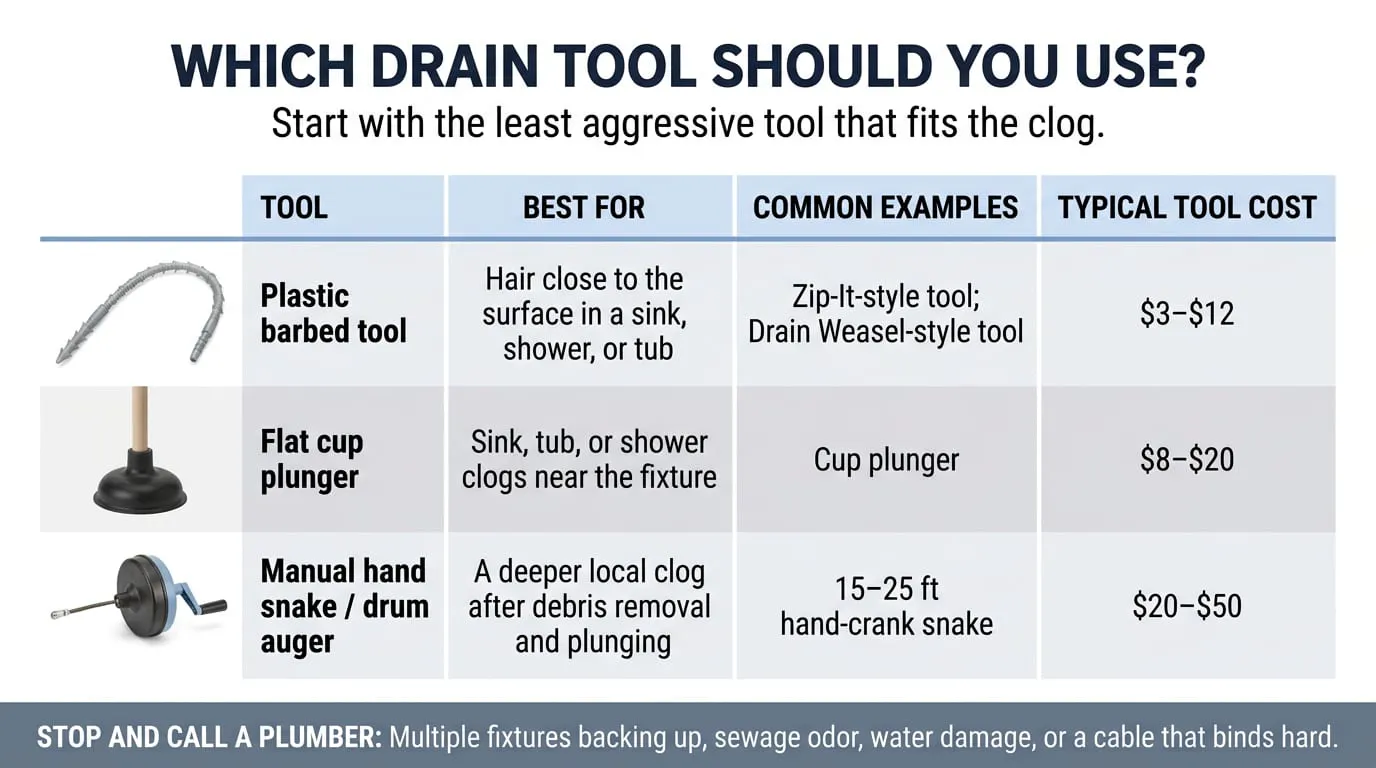
A plastic barbed tool is best for hair close to the surface in a sink, shower, or tub. It is low cost, low risk, and often the best first tool.
Examples: Zip-It-style tools and Drain Weasel-style tools.
A hand-crank auger has a metal cable inside a drum. It can reach farther into a local branch line and is useful when visible debris removal and plunging have not worked.
Examples: RIDGID EZ Spin, PowerSpin+, Kwik-Spin+, and similar 15- to 25-foot manual drum snakes. RIDGID lists models intended for sink, tub, and shower blockages in smaller household drain lines; verify your pipe size and application before use.
A toilet auger is a different tool. It has a protective sleeve and bend designed for a toilet trapway. Do not use a standard metal snake in a toilet.
A stuck cable is not an instruction to apply more force. Pull back slightly, rotate the opposite way, and try again. If it remains stuck, stop.
This can expose you to caustic splashback. If a chemical product is in the line, do not snake it. Tell the plumber exactly what was used.
Standard snakes can scratch porcelain and are not designed for the trapway. Use a toilet auger.
Clean the stopper, cover, and trap before reaching for a long cable. Many clogs are much closer than people expect.
Standing water can splash when you pull a loaded cable back out, especially from a full sink or tub. Eye protection takes a few seconds to put on and prevents a genuinely bad outcome.
Older cast iron, low-quality PVC, or an already-cracked fitting can be more vulnerable to a stiff metal cable than a newer one. If you know your plumbing is old or already compromised, start with the plastic barbed tool and go slower than usual with a hand-crank snake.
A drain snake fixes what is already stuck, but a few habits cut down on how often you need one.
Use a hair catcher or mesh screen in showers, tubs, and bathroom sinks. Most of what a hand snake pulls out is hair, and a basic screen costs about five dollars and catches it before it goes down the drain.
Run hot water for 30 seconds after washing dishes or using a garbage disposal to help keep grease from setting on the pipe walls.
Clean the stopper or pop-up assembly every few months instead of waiting for the drain to slow down. It is the easiest place for hair and soap scum to collect first.
Avoid pouring grease, coffee grounds, or large amounts of food scraps down a kitchen drain, even with a disposal running.
None of these guarantee you will never need a snake again, but they push the timeline out, and a slow-forming clog is easier to catch and clear than the kind of blockage this guide is built around.
The right tool can make a simple repair manageable. The wrong tool, or the wrong diagnosis, can create a bigger project. HomeFlash helps you start with clearer context so you can decide whether a hand snake is reasonable or whether it is time to call a pro. HomeFlash diagnosis the problem for you right away, so that decision is made for you. After that, HomeFlash will show you which tools you need for each project. Decisions in homeownership are important. HomeFlash helps you make the correct ones when it comes to repair.
Return to How to Unclog a Drain or read Plunger Not Working? Try This Before Calling Anyone.
More plain-English repair guides from the HomeFlash library.

How to Unclog a Toilet Without a Plunger
No plunger? No problem. Here are 5 proven ways to unclog a toilet using stuff you already have at home, step by step.
Sep 30, 2026
Learn more
Kitchen Sink Drain Clogged: Grease, Food, and What Actually Works
Kitchen sink clogged? Learn how to clear grease and food buildup safely, when to clean the P-trap, and when a plumber is the smarter call.
Sep 30, 2026
Learn more
Bathtub Drain Clogged? Before You Call a Plumber, Try This First
Bathtub drain clogged? Start with this hair and soap-scum removal checklist, use the right tools safely, and know when a plumber is necessary.
Sep 30, 2026
Learn more
Baking Soda and Vinegar for Drains: Does It Actually Work?
Can baking soda and vinegar unclog a drain? Learn what this DIY method can help with, what it cannot fix, and safer options for real clogs.
Sep 30, 2026
Learn more