Snap a photo of your panel and HomeFlash tells you what’s going on, and whether it’s safe to touch, in about 60 seconds. Free.

Download HomeFlash. Snap a photo of your panel and answer a few questions, and we’ll tell you what’s going on and flag anything unsafe to touch yourself, before you find out the hard way.
You’re microwaving dinner, running a space heater, drying your hair at the same time, and the lights cut out. You walk to the panel, flip the switch back, and it holds. Or it doesn’t hold, and it trips again the second you touch it. Or nothing was even plugged into that circuit and it tripped anyway, which is the scariest version, because now you have no idea why it happened.
A breaker that trips once, from an obvious cause, is your electrical system doing its job. A breaker that trips repeatedly, trips for no obvious reason, or won’t stay reset is your electrical system trying to tell you something, and the something ranges from harmless to an active fire or shock risk. Before you touch anything else on this panel, it’s worth understanding what you’re actually working around.
A circuit breaker panel isn’t like most common repair issues homeowners troubleshoot themselves. It’s the one place in the house where a wrong move can cause a serious injury on the spot, not just a bigger repair bill later. A few things worth knowing before you go back to that panel:
This surprises a lot of people, so it's worth explaining clearly. Your panel has two parts. The bottom part is all the small breakers that control your outlets and lights, and the main breaker (usually the biggest switch, at the top) turns power off to all of them at once. But above the main breaker, where the thick cables come in from the meter outside, the power is always on. That part isn't controlled by any switch inside your house. It stays fully live and dangerous no matter what you flip off, and it only goes dead if the power company disconnects it from outside, at the meter. That's the whole reason it's fine for you to reset a breaker with the cover on, but never okay to take the cover off and look inside.
It doesn’t take industrial voltage to cause serious harm. Standard 120V and 240V household circuits are capable of causing a fatal shock under the wrong conditions, especially where water is involved. This is the entire reason GFCI protection exists for bathrooms, kitchens, garages, laundry areas, and outdoor outlets: current that leaks to ground through a wet hand or a damp floor can stop a heart at levels far below what most people assume is dangerous.
Never touch a panel, breaker, or outlet with wet hands, while standing on a wet or damp floor, or during or right after flooding near the panel. If your panel has been exposed to water for any reason, from a storm, a leak, or a flood, treat it as a hazard and call an electrician before touching anything, even if it looks fine.
Federal Pacific Electric (FPE) Stab-Lok, Zinsco, and Challenger panels are the three brands electricians and home inspectors flag most consistently for breakers that fail to trip reliably during a real fault, which defeats the entire purpose of the breaker. Check your panel door for the brand name; if it’s one of these three, that alone is worth a professional evaluation, whether or not you’re currently having trouble. Full details in Signs Your Electrical Panel Needs to Be Replaced.
Homes wired between roughly 1965 and 1973 sometimes used aluminum branch wiring instead of copper. Aluminum expands and contracts more than copper does, which can loosen connections over time and lead to overheating at outlets, switches, and the panel itself. If you know or suspect your home has aluminum wiring, mention it to any electrician you call, even for an unrelated issue.
The National Electrical Code (NEC 110.26) generally requires a clear, unobstructed space in front of a residential panel, typically around 3 feet of depth and at least 30 inches of width, with the panel door able to swing open fully. Storage boxes, furniture, or anything else blocking that space isn’t just inconvenient; it’s a real hazard if someone ever needs to reach the panel quickly, including a firefighter.
Keep your other hand in your pocket or behind your back while testing or resetting a breaker. This is a real technique electricians use: it keeps a potential shock from crossing your chest and reduces the risk of it reaching your heart.
Batteries die, and testers can malfunction. Test the tester on a source you know is live before you trust a “no voltage” reading on something you’re not sure about.
Electrical distribution equipment causes an estimated 51,000 home fires a year in the US, according to the Electrical Safety Foundation International, resulting in roughly 500 deaths, 1,400 injuries, and $1.3 billion in property damage annually. Arcing faults alone account for more than 28,000 of those fires. The Consumer Product Safety Commission estimates that proper AFCI protection could prevent about half of home electrical fires. None of that means every tripped breaker is an emergency; most aren’t. It means the ones that are worth taking seriously the first time, not the third time, and it’s why HomeFlash flags anything that looks unsafe before it tells you it’s fine to proceed.
This is exactly what HomeFlash is built to catch. Snap a photo of your panel and we’ll flag known-risk panel brands, warning signs at a glance, and anything that means “call an electrician now” instead of “here’s a possible cause,” before you’re standing in front of a live panel guessing.
Before you touch the panel again, answer these:
A single breaker that trips after you added a space heater to a circuit that already runs a lot of devices is usually a simple overload. A breaker that trips instantly, with nothing plugged in, or that’s warm to the touch, is a different problem entirely, and it’s not one to keep testing by hand.
Five things cause a breaker to trip, and they’re not equally serious: 1. an overloaded circuit (too many devices, the most common and most DIY-friendly cause), 2. a short circuit (a hot wire touching neutral or ground, not a “try again” situation), 3. a ground fault (usually a GFCI catching a shock risk in a bathroom, kitchen, or outdoor outlet), 4. an arc fault (an AFCI breaker catching electrical arcing before it turns into heat), 5. or a breaker or panel that’s simply failing on its own.
Telling these apart from your own panel is the hard part, and it’s exactly what HomeFlash is built to do from a photo. For the full breakdown of all five causes and how to tell them apart, read Why Does My Breaker Keep Tripping? (The Real Answer).
Identify what’s on the circuit, reset the breaker firmly to full OFF and then full ON (not just harder toward ON from wherever it landed), and stop immediately if it trips again with nothing plugged in. If it holds, add devices back one at a time to find the culprit. For the full step-by-step walkthrough, including GFCI and AFCI resets, read How to Reset a Circuit Breaker.
Situation | Reasonable first step | Common retail examples | When to stop and call a licensed electrician |
|---|---|---|---|
Breaker trips after adding a device | Unplug devices, reset once, add back one at a time | No special tool needed | It still trips with the circuit empty |
Suspect a dead outlet vs. a live but faulty one | Check with a non-contact voltage tester before touching anything | Klein Tools NCVT-1; Sperry Instruments VD6504 | Tester shows voltage where you didn’t expect it |
GFCI outlet won’t reset | Press RESET firmly; check for moisture nearby | Leviton SmartlockPro GFCI outlets (for reference, not self-install) | It trips again within seconds of resetting |
Confirming a circuit is fully dead before any work | Test with a multimeter or non-contact tester at the outlet | Klein Tools MM400; Fluke 1AC | Any uncertainty about whether it’s actually dead |
Breaker trips instantly with nothing plugged in | Stop. This is not a DIY step. | — | Immediately; this is a short circuit, arc fault, or failed breaker |
Panel is FPE Stab-Lok, Zinsco, or Challenger brand | Stop. Don’t keep testing individual breakers. | — | Schedule a licensed panel inspection regardless of symptoms |
Any of those means a licensed electrician, not another reset attempt. When in doubt, treat it as a “call an electrician” situation; the cost of an unnecessary service call is always smaller than the cost of guessing wrong on a live panel.
What not to do
Plain-English guides to the most common breaker problems, and how to tell which one you have.

Breaker Keeps Tripping With Nothing Plugged In: What’s Happening
A breaker that trips with nothing plugged into the circuit isn’t an overload. Learn the real causes, including a full breakdown of arc fault (AFCI) tripping, and when to call an electrician.
Sep 30, 2026
Learn more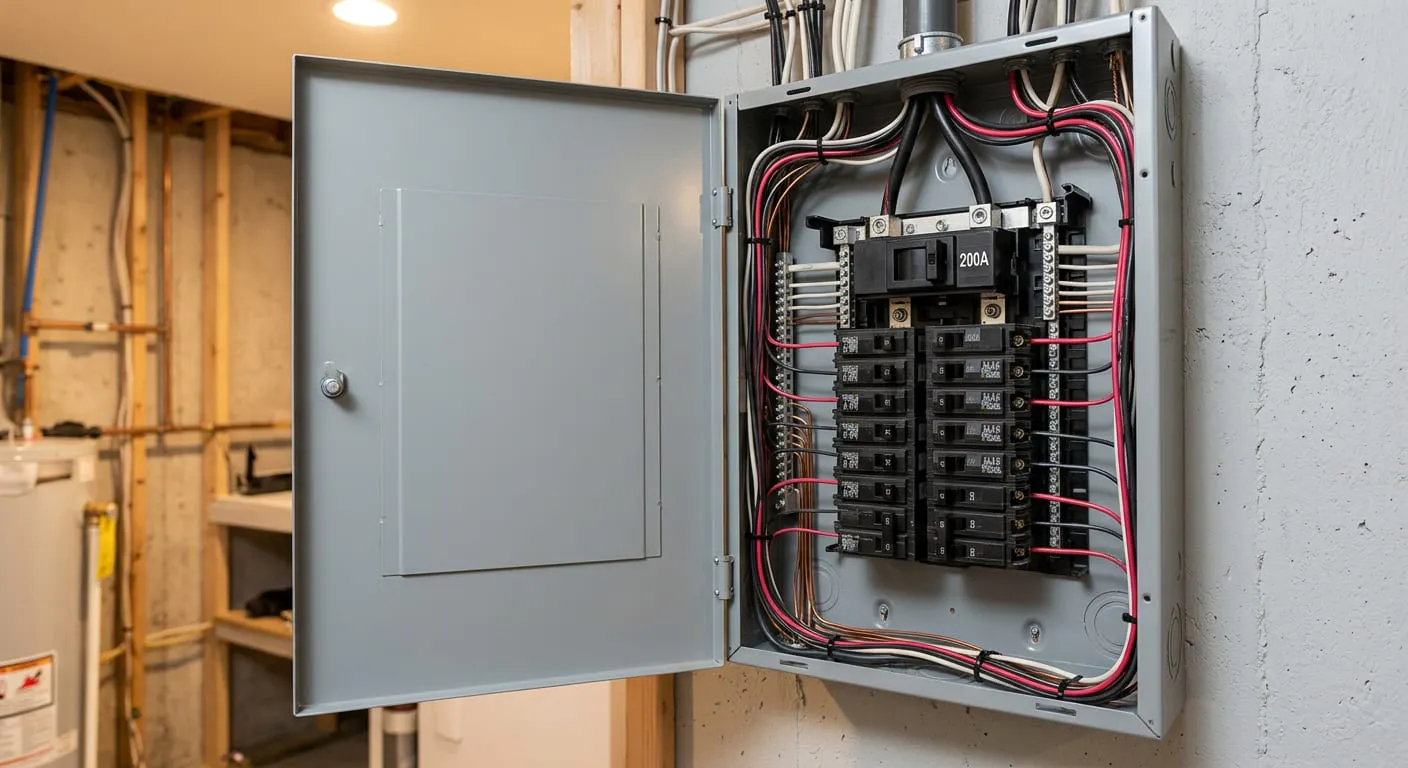
Why Does My Breaker Keep Tripping? The Real Answer
A tripping breaker isn’t always an overload. Here are the five real causes, how to tell them apart, and when a repeat trip means you need an electrician.
Sep 30, 2026
Learn more
Circuit Breaker Won’t Reset or Stay On: What It Means
A breaker that won’t stay reset is different from one that trips occasionally. Learn what it means, why it happens, and when to stop trying and call an electrician.
Sep 30, 2026
Learn more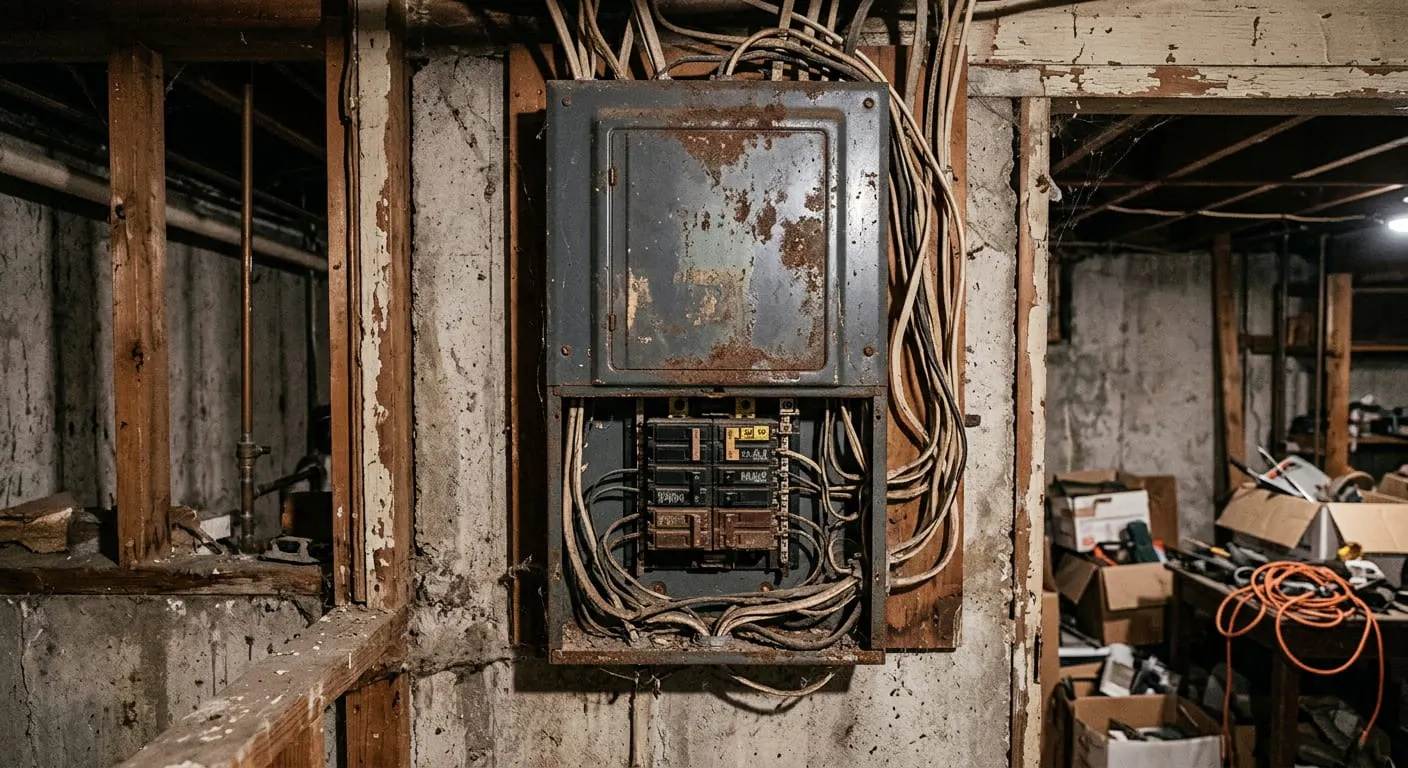
Signs Your Electrical Panel Needs to Be Replaced
Some breaker problems aren’t about the breaker at all. Learn the warning signs that your electrical panel itself needs replacing, including known-risk brands to check for.
Sep 30, 2026
Learn more