Half the houses in America have someone who resets a tripped breaker by shoving the switch harder toward ON. It usually works, which is exactly the problem: it works often enough that nobody learns the correct way, and the correct way is what tells you whether the trip was actually harmless.
For the full diagnostic guide, see Circuit Breaker Keeps Tripping: What It Means and What to Do.
If you’re not sure whether it’s safe to reset your breaker again, snap a photo of your panel in HomeFlash before you touch it. We’ll tell you if this looks like a normal reset or something that needs an electrician first.
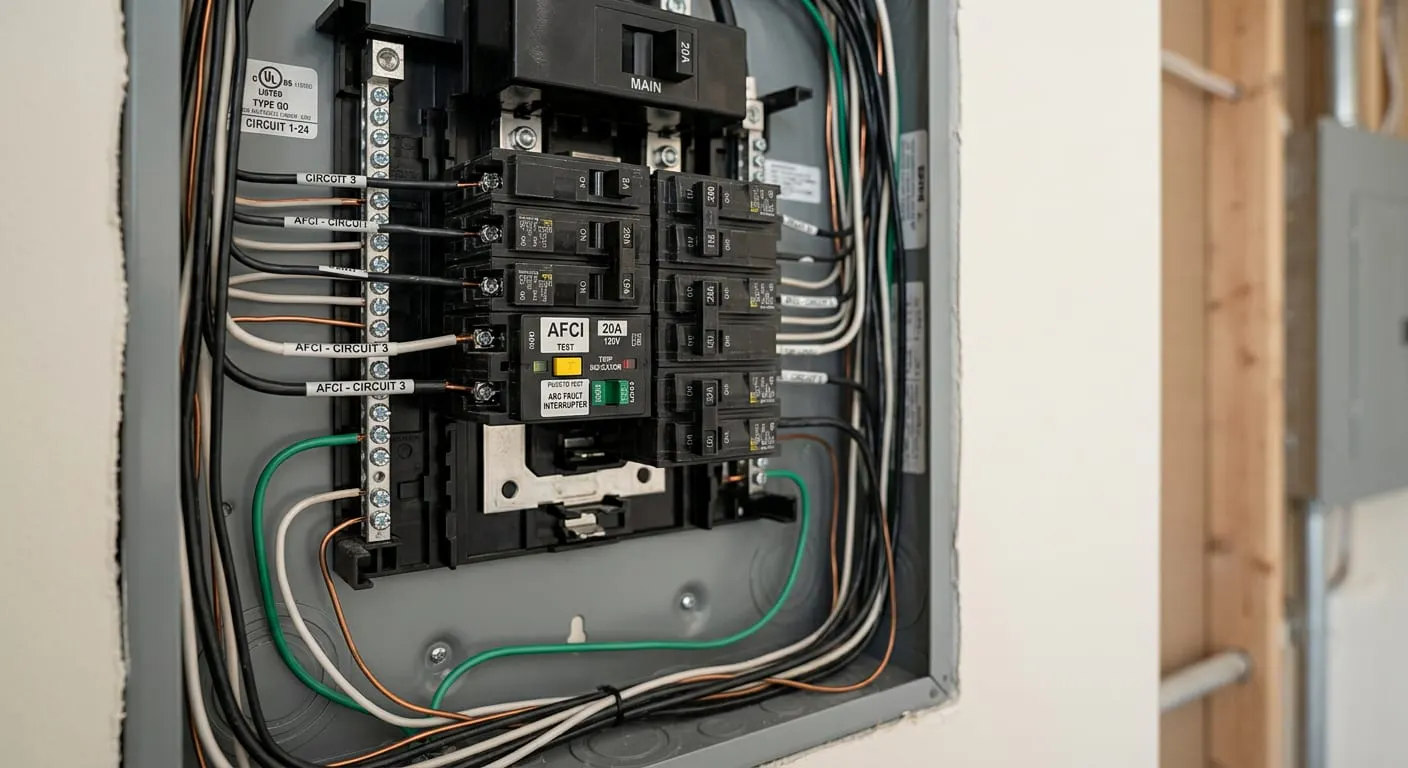
Open the panel cover and look for a breaker that’s sitting in a middle position, between ON and OFF, rather than fully at either end. That middle position is the tell. A breaker that’s fully at OFF was switched off on purpose; a breaker sitting in the middle just tripped.
Most panels are labeled by room or circuit, though the labeling in a lot of homes is decades out of date or was never accurate to begin with. If yours isn’t clearly labeled, this is worth fixing once you’ve solved the immediate problem; a panel you can actually read is safer for the next person who has to use it too.
This is the moment that separates “normal breaker behavior” from “call an electrician.” If the breaker trips again within a second or two of resetting, especially with nothing plugged into that circuit, don’t reset it a second or third time hoping for a different result. An instant trip with an empty circuit means the breaker detected a fault the moment power flowed, which points to a short circuit, a ground fault, or a breaker that’s failed.
For further information on what each of these could mean, read our Why Does My Breaker Keep Tripping? (The Real Answer)
Some breakers won’t even hold the ON position for a second, popping back to the middle immediately no matter how firmly you push it. This is different from tripping after holding briefly, and it usually means one of three things: an active short circuit somewhere on that line, a ground fault that’s severe enough to trip instantly, or a breaker that’s physically worn out and needs replacing. None of these are things to keep forcing.
For the deeper breakdown of this exact symptom, read Circuit Breaker Won’t Reset or Stay On: What It Means.
In any of these cases, stop resetting it and call a licensed electrician. According to the Electrical Safety Foundation International, home electrical fires cause an estimated $1.3 billion in property damage a year in the US; a lot of that starts with a breaker that someone kept resetting past the point it was trying to tell them something.
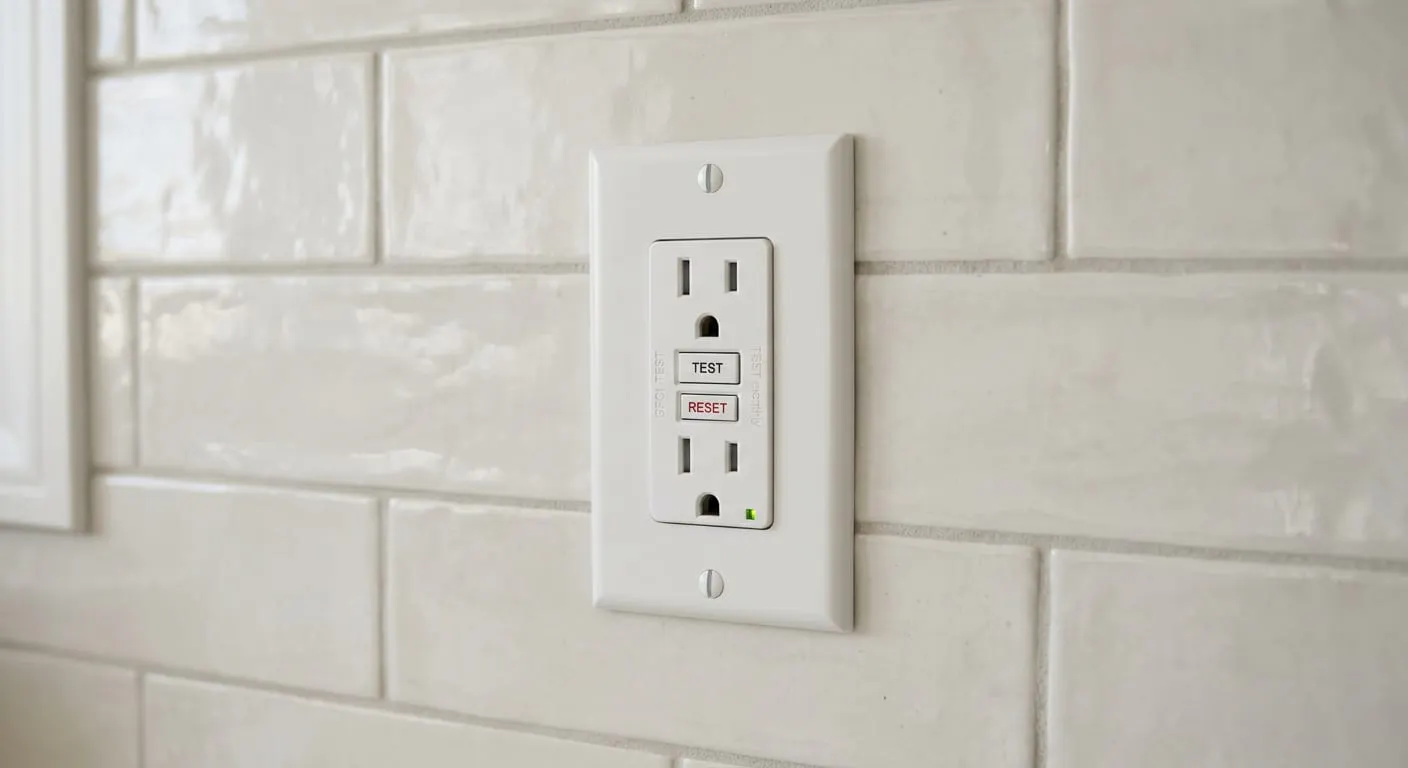
A GFCI outlet or breaker is a different animal from the standard breakers covering the rest of your house. You blow-dry your hair, the outlet clicks off, and you find yourself pressing a small button on the outlet itself instead of walking to the panel. That’s by design: a ground fault circuit interrupter monitors the current going out to a device and the current coming back, and if even a small amount goes missing, meaning it’s leaking somewhere else, like through water or through you, it cuts power in a fraction of a second. This is shock protection, not overload protection, which is why the National Electrical Code requires GFCIs specifically in bathrooms, kitchens, garages, laundry areas, and outdoor outlets: the places where water and electricity are most likely to end up in the same spot.
When it’s more than moisture: the GFCI trips even when nothing is plugged in and the area is dry, it won’t stay reset no matter how many times you press the button, multiple GFCI outlets on the same circuit trip together, the outlet or cover plate feels warm, or it’s tripping on outdoor outlets during dry weather, not just after rain. Any of those points toward a wiring issue rather than routine moisture, and it’s worth a licensed electrician rather than continued resetting.
A GFCI outlet and a GFCI breaker do the same job, protecting against ground faults, but a GFCI outlet protects just that outlet (and sometimes outlets wired downstream from it), while a GFCI breaker protects the whole circuit from the panel. Most manufacturers recommend testing GFCI outlets monthly using the TEST and RESET buttons; one that doesn’t trip when tested isn’t protecting you even if it looks and functions normally otherwise.
Don’t bypass a GFCI outlet or replace it with a standard outlet because it seems “too sensitive.” That protection exists specifically because of where the outlet is located, and disabling it removes the exact safeguard against shock that it’s there to provide.
An AFCI breaker resets the same way a standard breaker does, full OFF then full ON, but because AFCIs are more sensitive to arcing than a standard breaker is to overloads, a repeat trip on an AFCI circuit is worth taking seriously sooner rather than later. For the full breakdown of what arc faults are and how to tell a nuisance trip from a real one, read Breaker Keeps Tripping With Nothing Plugged In, which covers AFCI trips in depth.
A breaker that won’t stay reset is telling you something specific, and guessing which of three or four causes it is wastes time you don’t want to waste on an electrical problem. Snap a photo in HomeFlash and get a direct answer instead of a list of possibilities.
Return to the full Circuit Breaker Keeps Tripping guide, or read Breaker Keeps Tripping With Nothing Plugged In for what it means when there’s no obvious cause.
More plain-English repair guides from the HomeFlash library.

Breaker Keeps Tripping With Nothing Plugged In: What’s Happening
A breaker that trips with nothing plugged into the circuit isn’t an overload. Learn the real causes, including a full breakdown of arc fault (AFCI) tripping, and when to call an electrician.
Sep 30, 2026
Learn more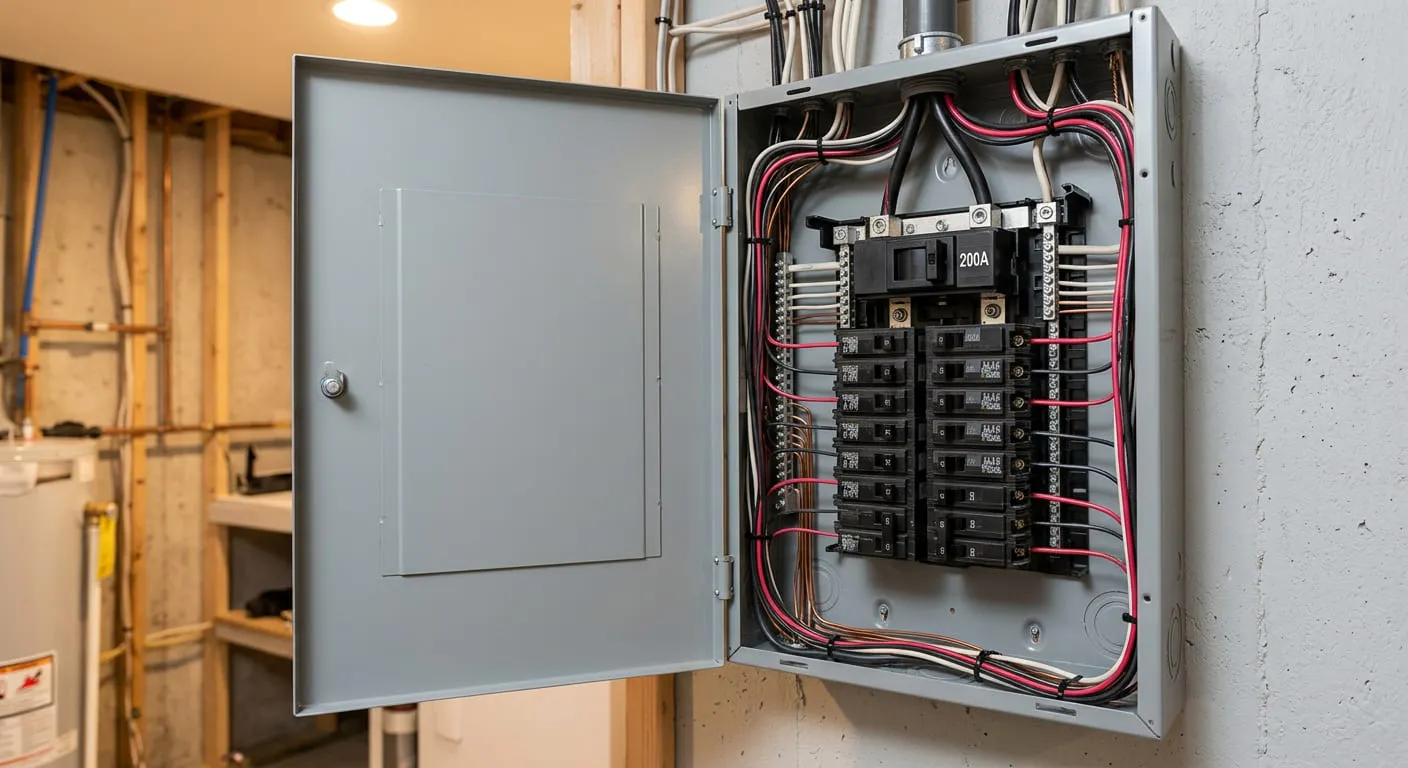
Why Does My Breaker Keep Tripping? The Real Answer
A tripping breaker isn’t always an overload. Here are the five real causes, how to tell them apart, and when a repeat trip means you need an electrician.
Sep 30, 2026
Learn more
Circuit Breaker Won’t Reset or Stay On: What It Means
A breaker that won’t stay reset is different from one that trips occasionally. Learn what it means, why it happens, and when to stop trying and call an electrician.
Sep 30, 2026
Learn more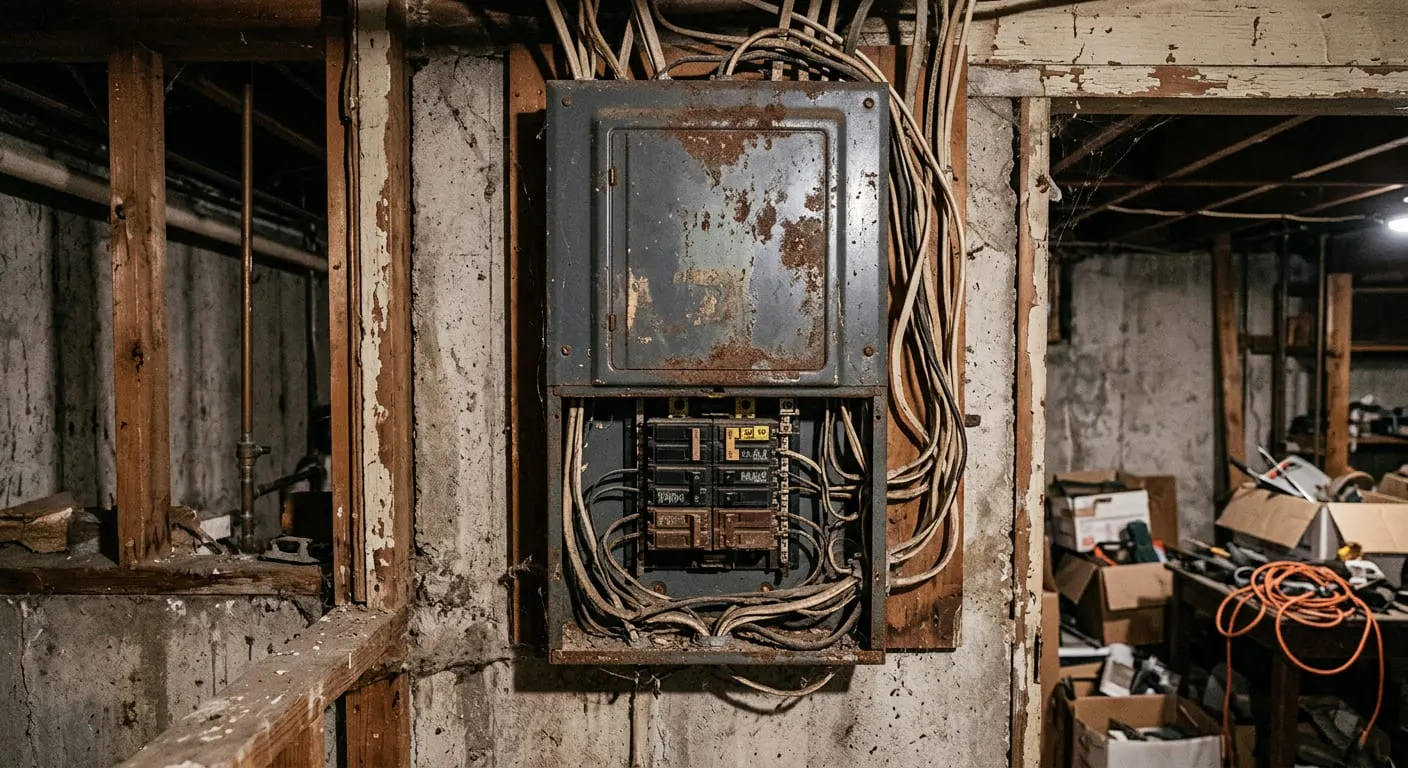
Signs Your Electrical Panel Needs to Be Replaced
Some breaker problems aren’t about the breaker at all. Learn the warning signs that your electrical panel itself needs replacing, including known-risk brands to check for.
Sep 30, 2026
Learn more