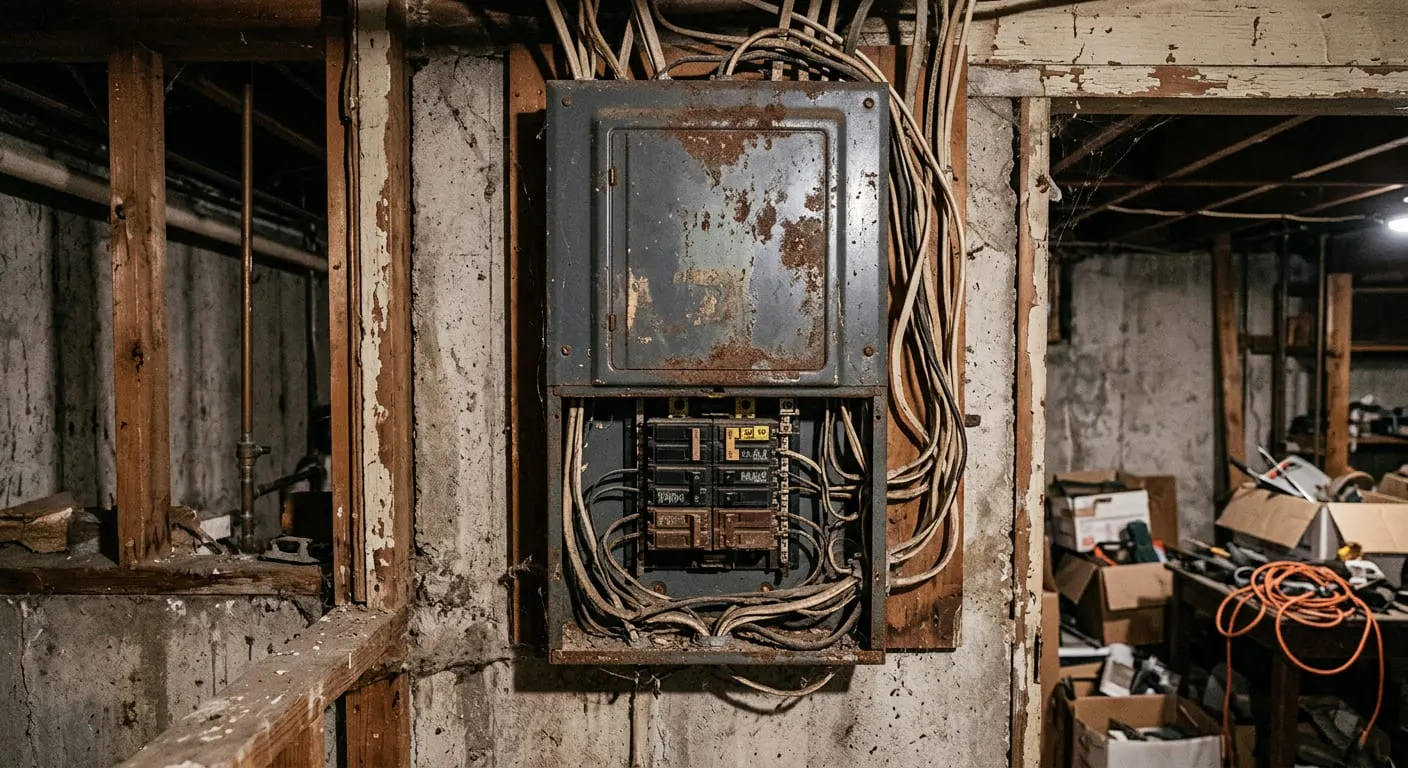
At some point, the problem stops being one breaker and starts being the panel itself. This is the most expensive and least fun conclusion in this entire series, which is exactly why it’s the one people are slowest to accept. If two or three of the symptoms below sound familiar, it’s worth having someone actually look, rather than continuing to treat each trip as its own separate, unrelated problem.
For the full diagnostic guide, see Circuit Breaker Keeps Tripping: What It Means and What to Do.
Not sure if what you’re seeing is a single bad breaker or the whole panel? Snap a photo of your panel in HomeFlash. We’ll flag known-risk brands, look for the warning signs below, and tell you honestly whether this looks like a panel-level issue.
Before anything else, look at the brand name on your panel. Federal Pacific Electric (FPE) Stab-Lok, Zinsco, and Challenger are the three brands that electricians and home inspectors flag most consistently for a specific and serious failure mode: breakers that fail to trip during a real overload or short circuit, which defeats the entire purpose of having a breaker in the first place. This isn’t a rare or fringe concern; these panels were installed in a large number of American homes between the 1950s and 1980s, and many are still in service. If your panel is one of these three brands, that fact alone is worth a professional evaluation, independent of whether you’re currently having any trouble with it.
Multiple breakers acting up, not just one. A single breaker with a problem usually points to that circuit. Two, three, or more breakers all developing issues around the same time, tripping more easily, failing to reset, or feeling loose, points more toward the panel itself, its bus bars, or its overall condition.
The panel is warm, buzzing, or smells faintly electrical, even when nothing seems obviously wrong. A healthy panel shouldn’t produce heat, sound, or smell you can notice from a few feet away.
Visible rust, corrosion, or water staining on or near the panel, especially around the top or bottom edges. Corrosion on internal components, particularly the bus bars that carry current to each breaker, is a known issue in aging Zinsco panels specifically.
Frequent flickering lights, especially when an appliance turns on, even on circuits that aren’t overloaded. This can point to a loose or corroded connection at the panel level rather than anything wrong with the specific circuit.
The panel is a fuse box, not breakers at all, or it’s rated for less amperage than your home actually uses (60 or 100 amp panels are common in older homes but often undersized for modern appliance and device loads).
You’ve had it inspected before and been told it’s an issue. If a home inspector, insurance company, or electrician has already flagged your panel, and nothing’s been done since, ongoing breaker problems are a good reason to revisit that.
Everything else in this series draws a line between “safe to check yourself” and “call an electrician.” Panel replacement doesn’t have a DIY side of that line. It involves working on the main service connection while it’s live or coordinating a temporary power shutoff with your utility, and it requires a permit and inspection in essentially every jurisdiction. This is the one item on this list where the entire job belongs to a licensed electrician, start to finish.
Even the main breaker at the top of your panel doesn’t change this. Switching it off cuts power to the branch circuits below it, but the wires feeding into the panel from the meter stay live until the utility disconnects service or pulls the meter. That’s true of every panel, not just the ones on this list, and it’s the reason “I turned off the main breaker first” doesn’t make it safe to open the cover and look inside.
A panel doesn’t have to be a Federal Pacific, Zinsco, or Challenger to be the actual problem. Two other patterns show up often enough to be worth checking on their own.
Amperage that hasn’t kept pace with the house. A lot of homes built before the 1990s were wired for 60 or 100 amps, which was plenty for the appliance load of that era. Add central air, an EV charger, an induction range, or just more devices per room, and a 100-amp panel can end up running close to its limit on a regular basis, which shows up as breakers that trip under combined load even though no single circuit is obviously overloaded. An electrician can tell you your panel’s rated capacity and whether your home’s actual draw is getting close to it.
A fuse box instead of a breaker panel. Homes built before the 1960s sometimes still have the original fuse-based system, where an overload blows a fuse rather than tripping a breaker. Fuse boxes aren’t automatically unsafe, but replacement fuses are easy to install with the wrong rating, which removes the built-in protection the sizing was supposed to provide, and most insurers and inspectors treat a fuse box as a modernization item regardless of how it’s performed.
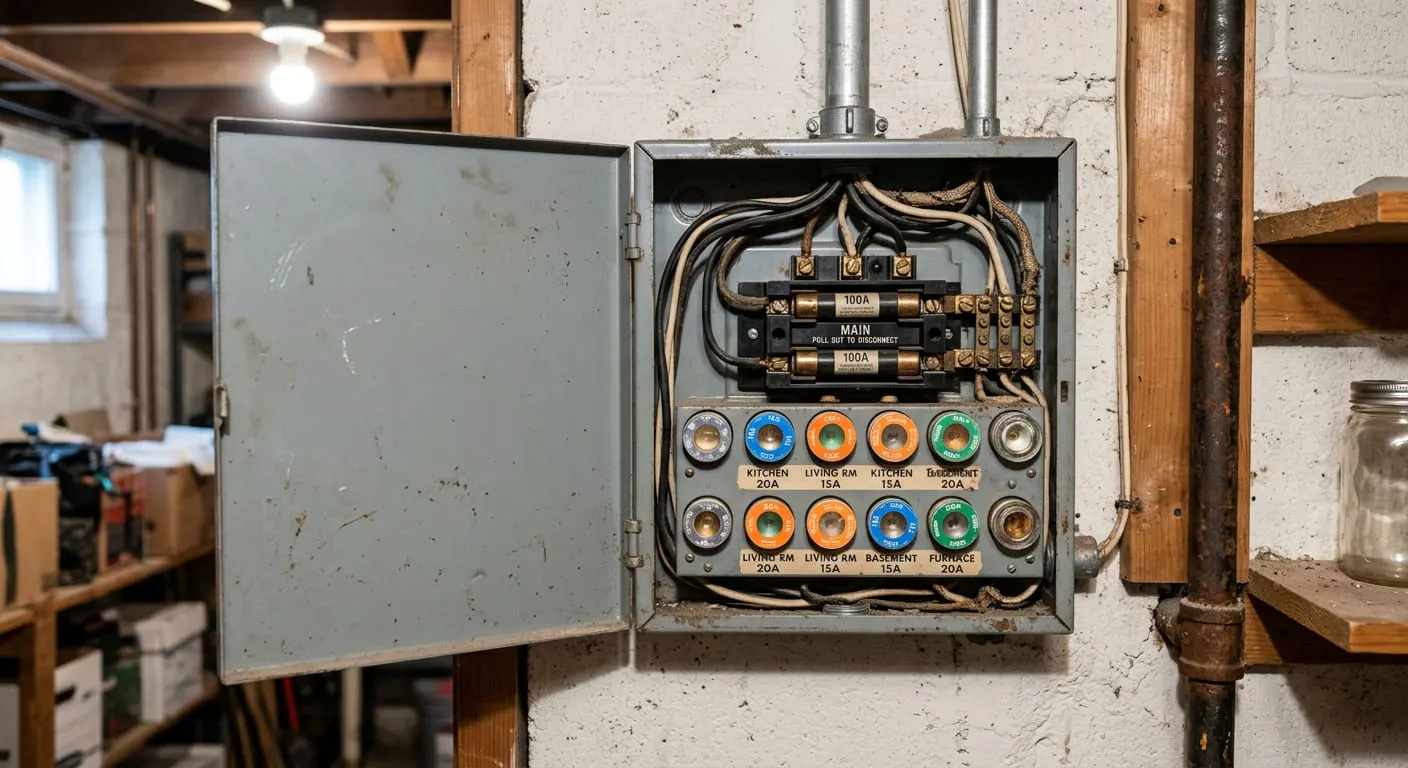
Neither of these is an emergency on its own. Both are reasons to ask an electrician to evaluate the panel the next time a breaker issue brings one out anyway, rather than waiting for a more serious sign to show up first.
A full panel replacement generally runs from around $1,500 to $5,000 or more, depending on your home’s amperage needs, the complexity of the existing wiring, permit costs, and local labor rates. Homes that also need a service upgrade (increasing from 100 amps to 200 amps, for example) or significant code-compliance work tend to land on the higher end of that range. Getting more than one quote is worth it here, both for price and because a second electrician’s assessment of what actually needs replacing versus repairing is genuinely useful information.
Knowing the general shape of the job makes it easier to plan around. A typical panel swap goes roughly like this:
Your power is typically out for several hours on the day of the work, sometimes a full day if a service upgrade is involved. Plan around that rather than being surprised by it: charge devices in advance, plan for food that doesn’t need refrigeration or cooking that day, and confirm the timing with your electrician if anyone in the home depends on medical equipment or climate control.
It’s worth knowing that some home insurance providers will decline coverage, or require replacement as a condition of coverage, for homes with Federal Pacific Electric or Zinsco panels specifically, given how consistently those brands are flagged for safety issues. If you’re buying, selling, or renewing a policy on a home with one of these panels, this often comes up regardless of whether you’ve had any breaker trouble at all.
This is the highest-stakes call in the entire series, and it’s exactly where a generic answer from a chatbot falls shortest: it can describe what a bad panel looks like in general, but it can’t look at yours. Snap a photo of your panel in HomeFlash, find out if your brand is a known risk, and get pointed to a licensed electrician for a real evaluation instead of a guess.
Return to the full Circuit Breaker Keeps Tripping guide, or read Circuit Breaker Won’t Reset or Stay On if this started with a single breaker before you noticed the wider pattern.
More plain-English repair guides from the HomeFlash library.

Breaker Keeps Tripping With Nothing Plugged In: What’s Happening
A breaker that trips with nothing plugged into the circuit isn’t an overload. Learn the real causes, including a full breakdown of arc fault (AFCI) tripping, and when to call an electrician.
Sep 30, 2026
Learn more
Why Does My Breaker Keep Tripping? The Real Answer
A tripping breaker isn’t always an overload. Here are the five real causes, how to tell them apart, and when a repeat trip means you need an electrician.
Sep 30, 2026
Learn more
Circuit Breaker Won’t Reset or Stay On: What It Means
A breaker that won’t stay reset is different from one that trips occasionally. Learn what it means, why it happens, and when to stop trying and call an electrician.
Sep 30, 2026
Learn more
How to Reset a Circuit Breaker (And What to Do If It Won’t Stay On)
Learn the correct way to reset a tripped circuit breaker or GFCI outlet, why “off then on” matters, and the signs that mean you should stop resetting it and call an electrician.
Sep 30, 2026
Learn more