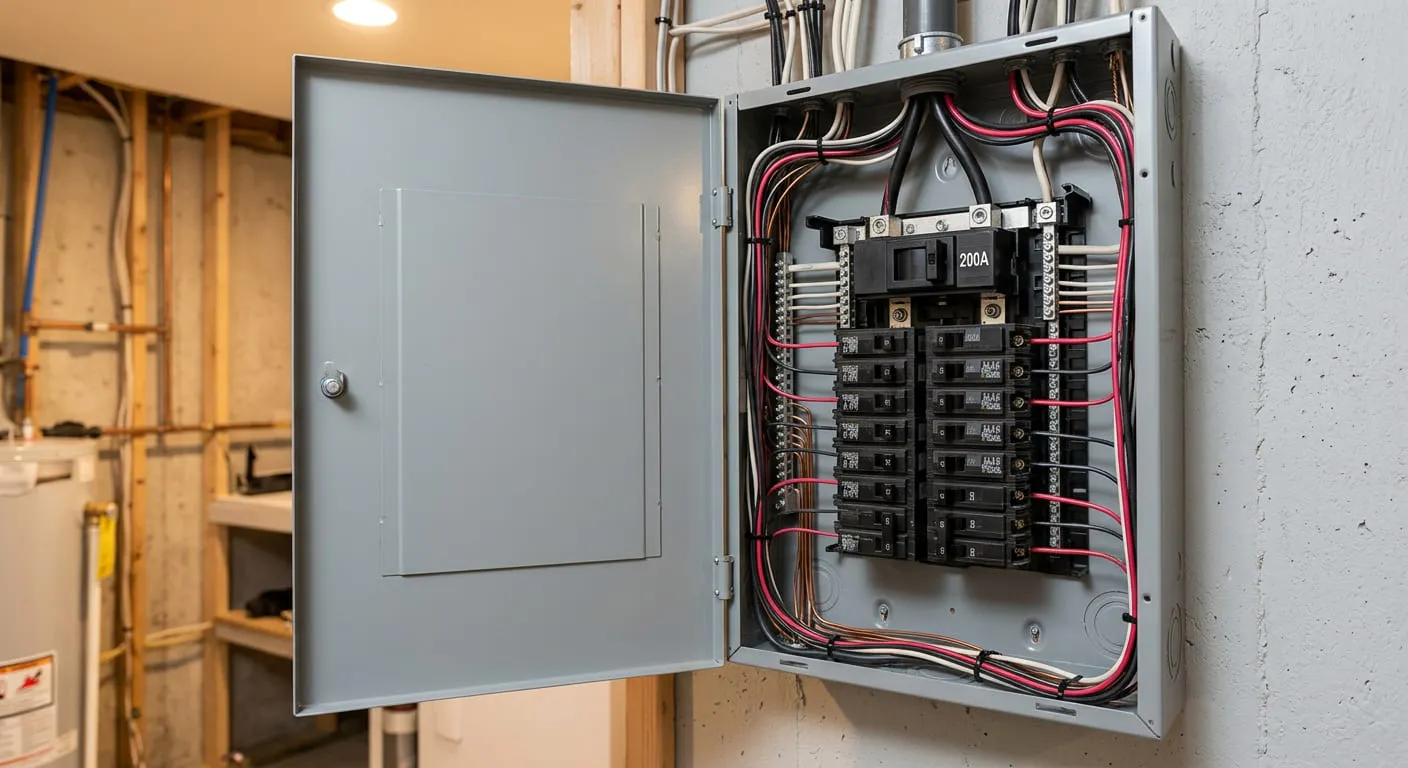
You Google “why does my breaker keep tripping” and every article has the same few answers: too many devices on one circuit, unplug something, reset it, done. That answer is right maybe half the time. It’s also the answer that makes people stop investigating too early, because the second or third time it trips, they assume it’s the same overload problem and just keep flipping the switch back. That’s the pattern that turns an early warning sign into a repair bill, or worse.
For the full diagnostic guide across every cause, see Circuit Breaker Keeps Tripping: What It Means and What to Do.
Before you reset your breaker, snap a photo of your panel in HomeFlash. We’ll ask a few questions about what happened right before it tripped and tell you which of the five causes below actually fits your situation.
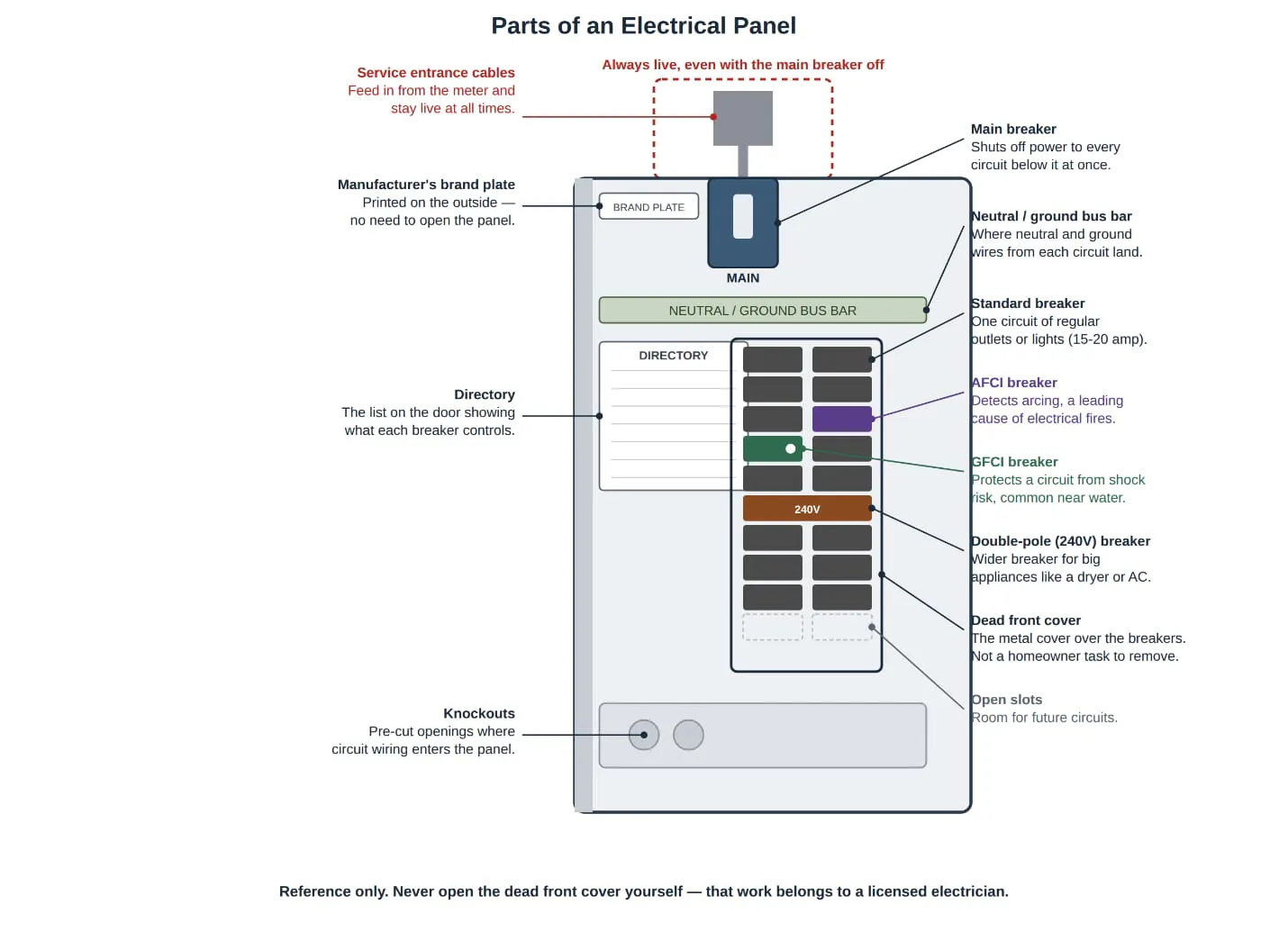
Too much current is being pulled through one circuit at once. Kitchens, home offices, and any room with a space heater or window AC unit are the usual suspects. This is the cause everyone assumes, and it’s genuinely the most common one, which is exactly why it’s easy to keep assuming it when the real cause is something else.
A hot wire is touching a neutral or ground wire somewhere it shouldn’t. This can come from damaged insulation, a pinched wire behind a wall, a nail through a cable, or a failing appliance cord. Short circuits trip a breaker fast, hard, and often instantly on reset.
Current is leaking somewhere it shouldn’t, usually because water reached a connection. This is what GFCI outlets and breakers are specifically built to catch in bathrooms, kitchens, laundry rooms, garages, and outdoor outlets.
Electricity is arcing, meaning jumping a gap it shouldn’t jump, usually from worn insulation, a loose connection, or a damaged cord. AFCI breakers are required in most living spaces under the National Electrical Code specifically because arcing is a common cause of fires that start inside walls, invisible until it’s too late.
Sometimes the breaker itself is the problem: it’s aged out, it’s a known-risk brand, or it’s tripping below its rated load. This is the cause people rule out last, usually after they’ve already replaced or unplugged everything else.
This is the one distinction that matters most, because it’s the difference between a five-minute fix and a call to an electrician.
An overload usually has a clear trigger: you plugged something in, or turned something on, right before it tripped. It resets and holds once you remove that device. It happens at predictable times, like whenever the space heater and the hair dryer run together.
The other four causes tend to trip without an obvious trigger, trip again immediately on reset, or trip even when the circuit is nearly empty. If you unplug everything on that circuit and it still won’t hold, you’re not looking at an overload anymore.
Pay attention to the timing, not just whether it trips. A breaker that trips within a second or two of being reset, especially with nothing plugged in, is telling you it detected a fault the instant power flowed, which points to a short circuit or a failed breaker. A breaker that holds for a while, then trips once a device kicks on (like a compressor cycling in a fridge or AC unit), points more toward an overload or a device pulling a momentary surge on startup.
Electrical distribution equipment is involved in an estimated 51,000 home fires a year in the US, according to the Electrical Safety Foundation International. That number includes plenty of situations that started exactly like “my breaker keeps tripping and I’m not sure why.”
Cause | Usual trigger | Safe to test yourself? | Call an electrician if… |
|---|---|---|---|
Overloaded circuit | A specific device (space heater, hair dryer) added to a busy circuit | Yes, unplug and reset | It still trips with the circuit empty |
Short circuit | No obvious trigger; damaged insulation or a pinched wire | No, diagnosis only | Any time you suspect it |
Ground fault | Water or moisture near an outlet or connection | Reset the GFCI once | It won’t hold, or trips with nothing plugged in and no moisture present |
Arc fault | Worn insulation, a loose connection, an aging cord | No, diagnosis only | Any repeated AFCI trip without an obvious device cause |
Failing breaker or panel | No trigger; age, wear, or a known-risk panel brand | No | Immediately, especially on FPE, Zinsco, or Challenger panels |
It’s worth knowing what you’re paying for, since “just call an electrician” can feel like a vague answer on its own. A licensed electrician diagnosing a tripping breaker will typically walk through the same logic in this article, but with tools and access you don’t have: a multimeter to check actual voltage and continuity on the circuit, a visual inspection inside the panel and at accessible outlets for scorching or loose connections, and questions about exactly when the trips happen, since that pattern is the single most useful diagnostic clue. For a short circuit or arc fault, they may need to open walls or trace wiring to find the fault point, which is why these repairs can vary so much in cost. For a straightforward overload, the visit may be as short as confirming the cause and advising you to redistribute devices across circuits, or recommending a dedicated circuit for a specific appliance.
Having answers ready before they arrive (which breaker, what was running, how long this has been happening, whether you’ve reset it more than once) shortens the visit and often the bill.
Cost varies a lot by cause, which is part of why guessing at the cause first matters. A simple overload usually costs nothing to fix beyond redistributing what’s plugged in, or a modest amount if you add a dedicated circuit for a specific appliance. A short circuit or arc fault repair depends entirely on how accessible the fault is; tracing a fault behind a wall costs more than one at an outlet or junction box you can already see. Most electrical service calls for diagnosis alone run in the range of a standard hourly trade rate for the first hour, with the total depending on what they find. Getting a specific diagnosis before you call, rather than describing “it keeps tripping” and hoping for the best, tends to shorten both the visit and the bill.
Two breakers that each trip five times in a month are not necessarily the same problem. A breaker that trips five times, always tied to the same device turning on, is telling you something consistent and probably minor. A breaker that trips five times with no consistent trigger, at different times of day, on different circuits, is a pattern that points toward the panel or the wiring rather than any single device. When you’re deciding whether to keep monitoring or call someone now, the consistency of the trigger matters more than how many times it’s happened.
A list of five possible causes isn’t a diagnosis, it’s a starting point. HomeFlash takes it the rest of the way: snap a photo, answer a few questions about what happened before it tripped, and get a specific answer instead of a general one.
Return to the full Circuit Breaker Keeps Tripping guide, or read How to Reset a Circuit Breaker (And What to Do If It Won’t Stay On) for the correct reset procedure.
More plain-English repair guides from the HomeFlash library.

Breaker Keeps Tripping With Nothing Plugged In: What’s Happening
A breaker that trips with nothing plugged into the circuit isn’t an overload. Learn the real causes, including a full breakdown of arc fault (AFCI) tripping, and when to call an electrician.
Sep 30, 2026
Learn more
Circuit Breaker Won’t Reset or Stay On: What It Means
A breaker that won’t stay reset is different from one that trips occasionally. Learn what it means, why it happens, and when to stop trying and call an electrician.
Sep 30, 2026
Learn more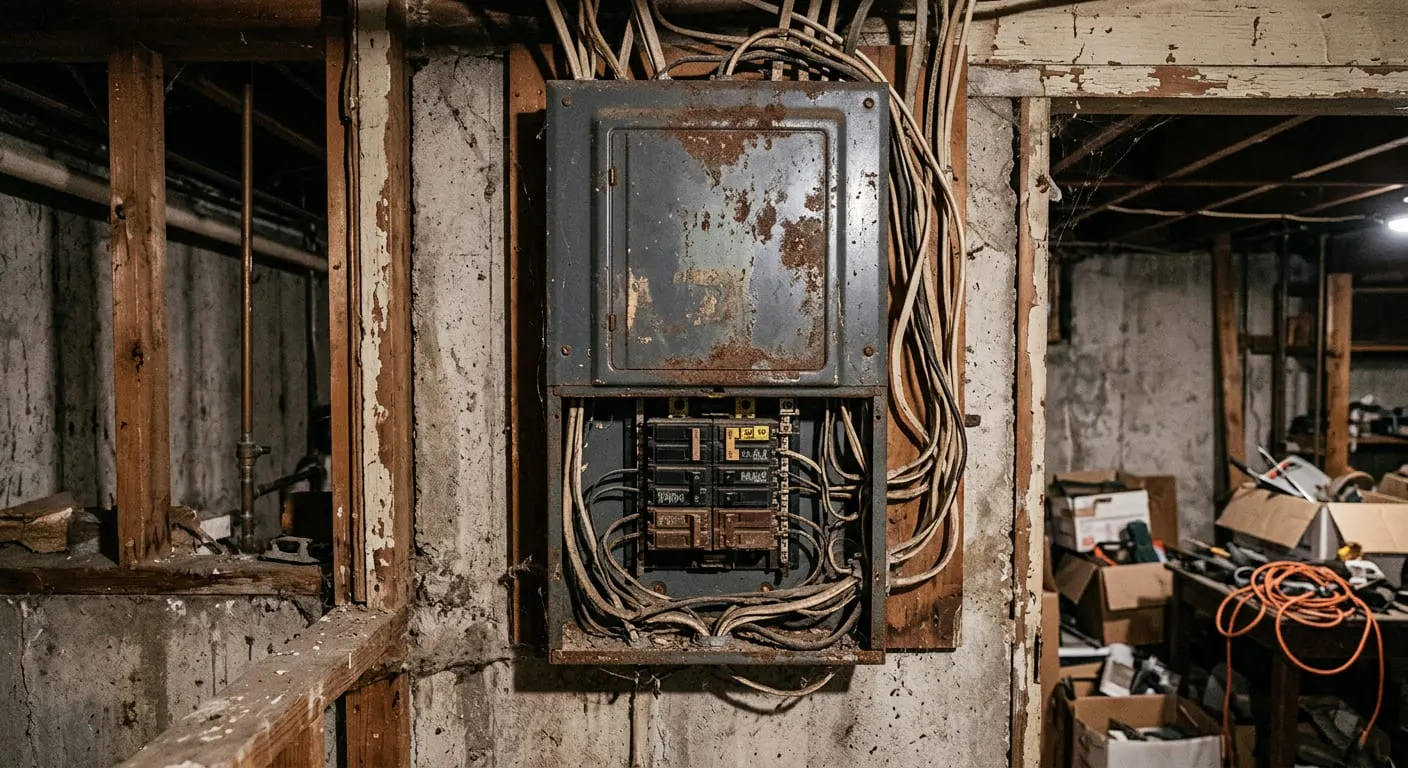
Signs Your Electrical Panel Needs to Be Replaced
Some breaker problems aren’t about the breaker at all. Learn the warning signs that your electrical panel itself needs replacing, including known-risk brands to check for.
Sep 30, 2026
Learn more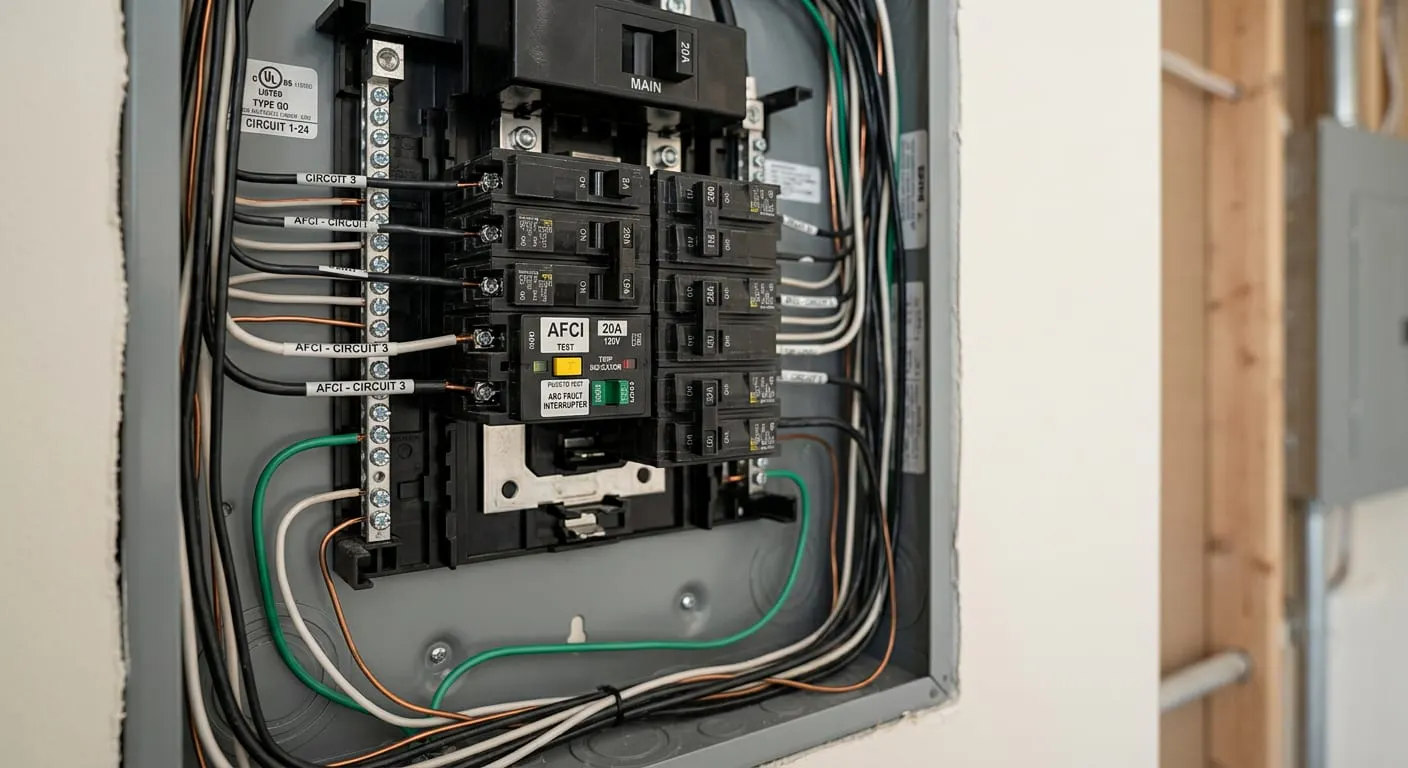
How to Reset a Circuit Breaker (And What to Do If It Won’t Stay On)
Learn the correct way to reset a tripped circuit breaker or GFCI outlet, why “off then on” matters, and the signs that mean you should stop resetting it and call an electrician.
Sep 30, 2026
Learn more