Why Is My Air Conditioner Not Cooling? Simple Checks Before You Call a Pro
- will@housdoctor

- Jul 6
- 5 min read
When a heat wave hits and your air conditioner stops cooling, it’s more than an inconvenience — it can quickly become a health and safety issue, especially for kids, older adults, and anyone working from home. In many parts of the U.S., recent summer temperatures have pushed well past 90°F, and HVAC companies get overwhelmed fast. Before you wait days for a technician, there are a few simple DIY checks you can do to diagnose why your AC isn’t cooling and decide what to do next.
Start with safety and basics
Before touching anything, make sure you’re safe and the power is under control. Turn off the AC at the thermostat and, if you’re going to open panels, turn off power at the breaker. Never remove covers you’re not comfortable handling, and never work on wiring if you’re unsure. These simple steps help you avoid electrical shocks and damage to the unit.
Then confirm these basics:
The thermostat is set to “Cool,” not “Heat” or “Fan,” and the temperature is set lower than the current room temperature.
All supply vents are open and not blocked by furniture, rugs, or curtains.
Interior doors are not all tightly closed, which can disrupt airflow in some systems.
These may sound obvious, but HVAC techs regularly find “no cooling” calls caused by thermostat settings and blocked vents.
Check the air filter
A clogged air filter is one of the most common reasons an air conditioner can’t keep up in hot weather. When the filter is dirty, airflow drops, the system has to run longer, and the coil can even freeze.
Locate your return air filter (often behind a grille in a hallway or inside the furnace/air handler).
If you hold the filter up to the light and can barely see through it, it’s overdue for replacement.
Most homeowners should check filters at least every 1–3 months in cooling season, especially during heat waves when the AC runs more.
Replacing a filter is a quick DIY task, but it has a big impact on cooling performance and energy use.

Look at the outdoor unit
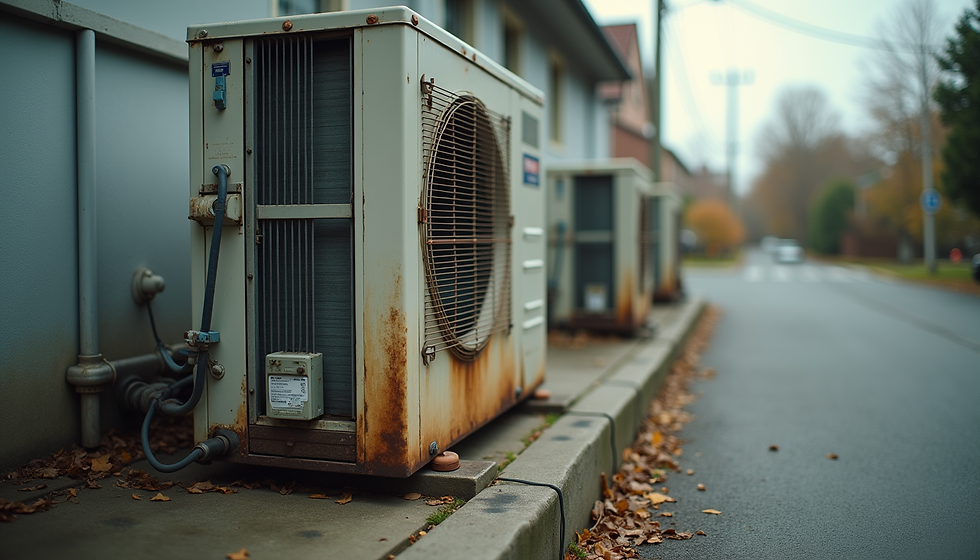
If you have central AC or a heat pump, the outdoor unit (condenser) does a lot of the work to move heat out of your home. In summer, it’s common for this unit to get clogged with leaves, dirt, grass clippings, or other debris.
With the system off:
Check that the outdoor unit’s fins and coil are not covered in dirt or blocked by plants.
Make sure there’s at least 2–3 feet of open space around the unit so it can breathe.
Listen for unusual noises when the system runs — loud grinding, clicking, or “short cycling” (starting and stopping quickly) are signs you should call a pro.
You can gently rinse the outside coil with a garden hose (no pressure washer), spraying from the top down, but avoid bending the fins or opening any panels you’re not comfortable with.

Check for ice or puddles
When an AC runs with low airflow or low refrigerant, the indoor coil can freeze. Later, that ice melts and can cause leaks or water around the air handler.
Look for:
Ice buildup on the refrigerant lines near the indoor unit.
Water pooling under the air handler or in the pan, especially after the system has been running hard during hot weather.
If you see ice, turn the system off and let it thaw completely before running it again. A frozen coil is a clear sign you should have the system inspected, even if it starts cooling again temporarily.
Listen for fan and compressor issues
When you set the thermostat to “Cool,” you should hear both the indoor blower and the outdoor unit. If you feel warm air from the vents, or only one part of the system seems to run, that’s important information.
Common patterns homeowners notice:
Indoor fan is blowing, but outdoor unit is silent or only hums.
Outdoor unit runs, but no air comes from vents inside.
System cycles on and off quickly, never getting the home down to the set temperature.
These symptoms help narrow down whether the issue is electrical, mechanical (fan or compressor), or airflow-related — which is exactly the kind of “triage” information HouseDoc is designed to use.
Check your home, not just the AC
Sometimes the problem is the house, not the equipment. During extreme heat, even a correctly sized AC can struggle if:
Windows are uncovered and direct sun is hitting large glass areas for hours.
Attic insulation is thin or missing, letting heat pour into living spaces.
Doors and windows leak conditioned air because of worn weatherstripping.
Closing blinds during the hottest hours, sealing obvious gaps, and making sure interior doors aren’t trapping cold air in some rooms while others bake can improve comfort and reduce load on the system.
When simple checks suggest a deeper problem
If you’ve checked the thermostat, vents, filter, outdoor unit, and obvious ice or leaks, and your AC still won’t keep up, it’s time to decide whether to keep troubleshooting, call a pro, or start planning for replacement.
Common “call a pro now” signs include:
Burning, electrical, or strong chemical smells.
Breaker tripping repeatedly when the AC runs.
Loud grinding, screeching, or metal-on-metal noises.
Very old equipment (often 15+ years) combined with high energy bills and repeated issues.
These issues can indicate failing compressors, motors, wiring, or refrigerant problems — all things that should be handled by licensed HVAC technicians.
Finding a reliable HVAC pro when you need one
When the diagnosis points to “call a pro,” the next challenge is finding someone reliable, available, and fairly priced — especially when the entire region is coping with high temperatures. HouseDoc’s goal is to connect homeowners with vetted local HVAC technicians and handymen who already understand the symptoms you’ve logged.
That means:
Contractors see a clear summary of your issue before they arrive, which helps them show up prepared.
You avoid repeating your story three times just to get a rough quote.
Over time, you can build a history of home issues and repairs, so future decisions (like whether to repair or replace an aging AC) become easier.
In short, HouseDoc doesn’t replace pros — it helps you decide what’s going on, then makes it faster to get the right help.

Simple next steps if your AC isn’t cooling today
If you’re reading this because your AC isn’t cooling during a hot summer spell, here’s a quick action list:
Confirm thermostat settings and make sure vents are open.
Check and replace the air filter if it’s dirty.
Inspect the outdoor unit for debris and give it space.
Look for ice on lines or water leaks around the indoor unit.
Note any unusual noises, smells, or breaker trips.
Then, use HouseDoc as your triage tool to organize what you’re seeing and figure out whether a DIY fix, a repair call, or a replacement quote makes the most sense.

Comments